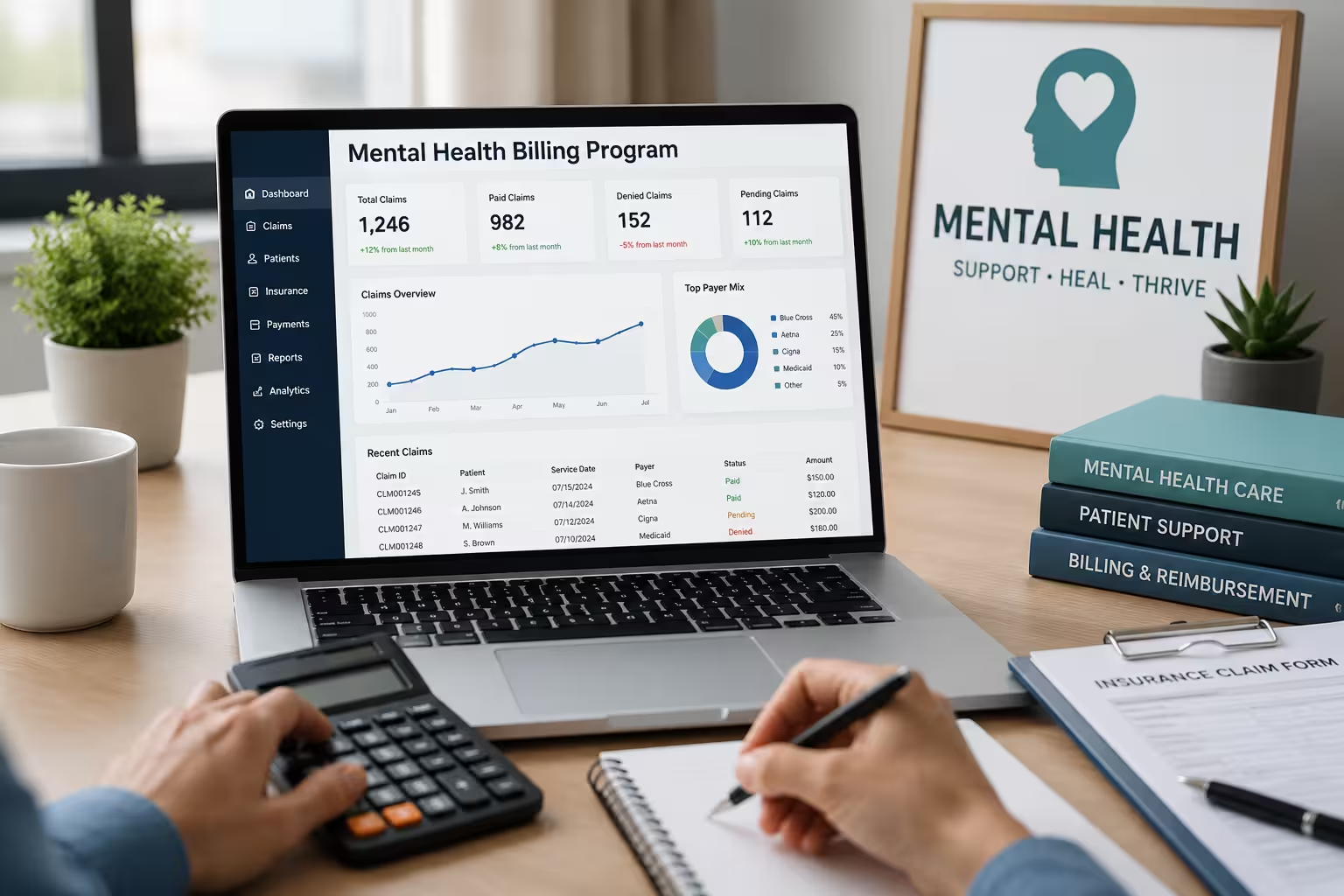
Verify Health Insurance: Eligibility Checks vs. Insurance Discovery
Learn how to verify health insurance, understand the differences between eligibility verification and insurance discovery, and reduce claim denials by identifying missing patient coverage.

In 2025, 32% of claim denials were due to incomplete or missing insurance patient registration data. This information is one of the most important pieces of the healthcare revenue cycle. But having an insurance card on file does not always mean you have the complete picture.
A patient may have active coverage that has changed since their last visit. They may have a secondary plan they forgot to mention. Or they may arrive without any insurance information at all. In each case, simply verifying insurance may not be enough to establish accurate eligibility.
That is where eligibility verification and insurance discovery work together. For healthcare organizations, using both processes can help identify coverage earlier. They reduce billing issues and help you make better decisions throughout the revenue cycle.
In this guide, we'll explain how eligibility verification and insurance discovery differ. As well as why both matter and how providers can streamline the process.
What Is Eligibility Verification?
Eligibility verification checks a patient's known insurance information. It shows whether the coverage is active and whether it applies to the services the patient needs. This step matters in patient access and the revenue cycle. Accurate insurance information helps providers bill the right payer. It also helps them understand coverage before they submit a claim.
Eligibility verification works with information the patient or provider already has. That might be a member ID, a payer, a plan, or medical insurance information.
For example, a patient hands over an insurance card at registration. The provider uses that information to check whether the policy is active. The provider can also review the coverage tied to the plan.
But what if the patient gives no insurance information? Or what if the information on file is out of date? That is where insurance discovery serves a different purpose.
What Does Insurance Eligibility Verification Check?
An insurance verification check can confirm that a patient's health insurance is active. It can also show key details about the coverage.
Depending on the payer and the method, providers may see:
- Active or inactive coverage.
- Effective and termination dates.
- Patient and subscriber information.
- Member and group numbers.
- Health plan details.
- Copays and deductibles.
- Coinsurance.
- Out-of-pocket limits.
- Provider network information.
- Coverage limitations.
- Coordination of benefits information.
This information gives providers a clearer view of the insurance plan.
An active policy does not mean the plan covers every service. Providers may need to review benefits, payer requirements, and coordination of benefits. This can help them understand patient insurance eligibility and benefits. As well as how the payer will handle a particular service.
Why Is Patient Eligibility Verification Important?
Verifying eligibility before services helps providers spot issues early in the revenue cycle.
A patient's coverage may have changed since the last visit. A plan may have expired. Someone may have entered a member ID wrong. A patient may have more than one plan, which makes payer order harder to set.
An eligibility check helps catch these issues before they turn into billing problems.
It can also help providers:
- Confirm active insurance coverage.
- Verify patient insurance details.
- Identify potential coverage issues.
- Prepare patients for their financial responsibility.
- Support more accurate billing.
- Reduce avoidable rework.
- Improve patient experience.
Eligibility verification has one big limit, though. It can only check the coverage information the provider has. If the patient never reported a plan, verifying the information on file may not find it.
How Health Insurance Verification Can Help Reduce Denials
Accurate insurance information is an important part of preventing avoidable denied claims. When coverage is inactive or patient insurance details are incorrect, claims can be denied.
Health insurance verification helps providers confirm the coverage information they have before billing. When combined with insurance discovery, providers can further identify coverage not reported.
Together, these processes can help healthcare providers:
- Confirm active insurance coverage.
- Identify outdated or incorrect patient insurance details.
- Confirm the appropriate payer.
- Identify potential primary and secondary coverage.
- Catch coverage issues before claim submission.
- Reduce avoidable billing rework.
Verification cannot prevent every denial. However, getting more accurate insurance information earlier in the revenue cycle helps. It gives providers a stronger foundation for accurate billing and cleaner claims.
What Is Insurance Discovery?
Insurance discovery finds coverage that a provider does not have on file.
Patients do not always know their full insurance details. They may forget to mention a secondary plan. They may have switched coverage recently. They may have just become eligible for government coverage. Or they may show up without their card.
In these cases, an eligibility check on the available information may return "coverage not found." That does not always mean the patient has no insurance.
Insurance discovery looks beyond the information the patient gave. It helps identify potential coverage. Once the provider finds potential coverage, they can verify it. That shows whether the coverage is active and applies to the patient's care.
When Is Insurance Discovery Needed?
Insurance discovery helps when you cannot identify coverage with the information on hand.
Common situations include:
- A patient does not provide insurance information.
- Insurance information is incomplete.
- A patient's insurance information is old.
- Staff mark a patient as self-pay by mistake.
- A patient has changed insurance plans.
- A patient has extra primary, secondary, or tertiary coverage.
- A patient recently became eligible for Medicare or Medicaid.
- An emergency patient arrives without insurance information.
- Existing records do not reflect the patient's current coverage.
These situations create gaps in the revenue cycle. An account that looks like self-pay may have active insurance the provider did not know about.
Insurance discovery helps close that gap. It looks for coverage that might otherwise go unnoticed.
How Does Insurance Discovery Complement Eligibility Verification?
Insurance discovery and health insurance verification are closely related. Though they are not the same process.
Eligibility verification confirms known coverage. Insurance discovery helps identify unknown coverage. Together they compliment each other perfectly.
Say a patient hands over an insurance card at registration. The provider runs an eligibility check. It confirms the plan is active. It also shows the patient's benefits, including relevant patient benefits information.
Now say a patient gives no insurance information. An eligibility check cannot verify a policy the provider does not know about. Insurance discovery can instead search available patient information for potential coverage.
Once the provider finds coverage, they can run eligibility verification on it.
This creates a more complete process: Discover potential coverage. Verify the coverage. Confirm eligibility and benefits. Bill the appropriate payer
The two processes work together. Neither replaces the other.
Why You Need to Verify Eligibility and Health Insurance Coverage
Providers need accurate insurance information to make good decisions throughout the revenue cycle. Relying on only one process leaves gaps.
If a provider runs eligibility, they only confirm the insurance the patient gave. They may still miss other coverage the patient did not mention.
If a provider only uses insurance discovery, they may find potential coverage. But they still need to check whether that coverage is active and applies before they bill.
Using both processes covers both sides of the problem.
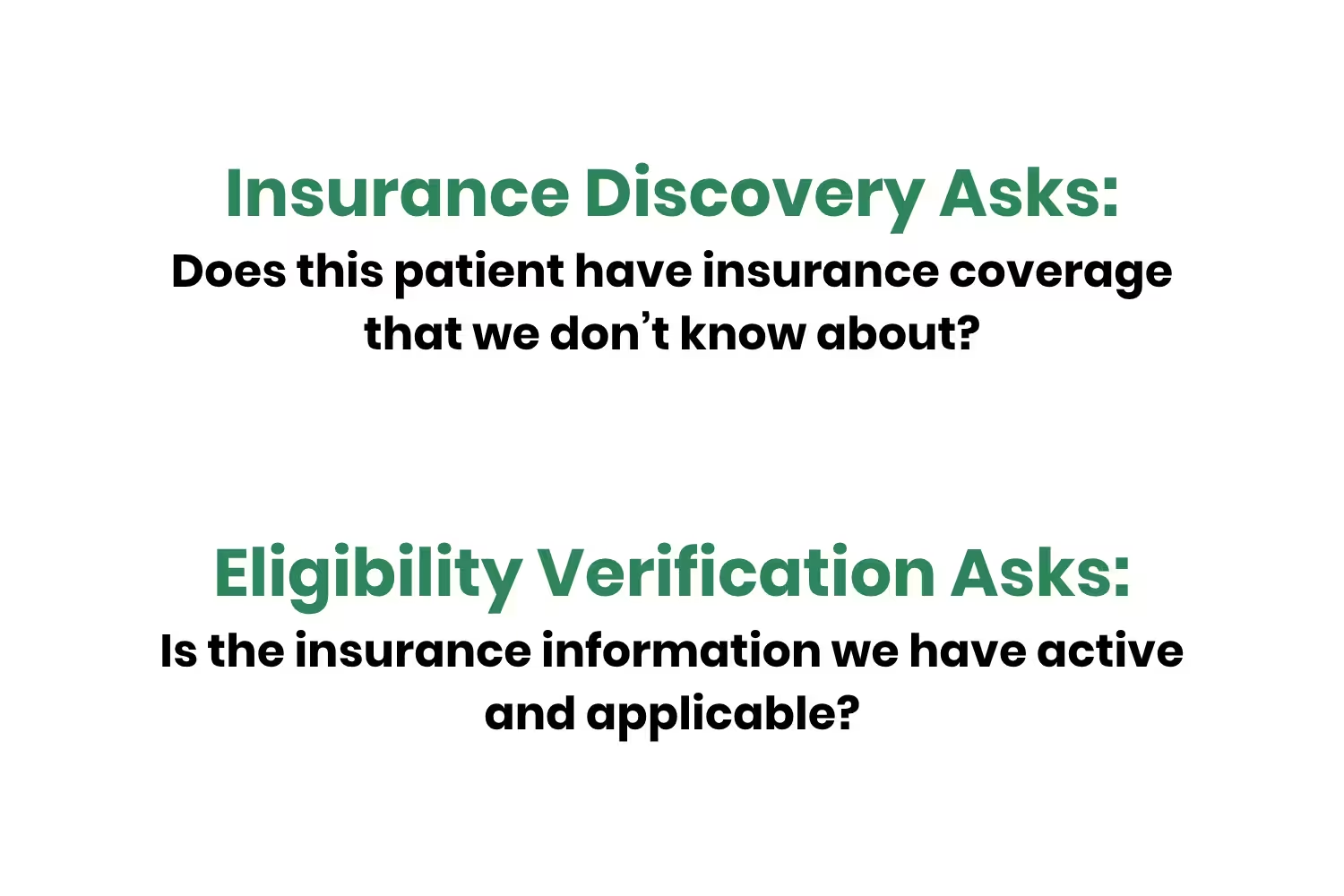
Eligibility verification asks: Is the insurance information we have active and applicable?
Insurance discovery digs deeper. Does this patient have insurance coverage that we don't know about?
Together, they help providers build a more accurate picture of a patient's coverage. Strengthening data before submitting claims.
That quality matters. Incomplete or inaccurate eligibility data can cause billing problems. A provider may send a claim to the wrong payer. They may bill inactive coverage. Or they may send a claim with no insurance information when active coverage exists.
These issues can lead to denied claims, extra admin work, and delayed revenue.
How to Streamline the Insurance Verification Process
Verifying coverage takes time. Especially when staff search payer portals by hand. Or make phone calls, review records, and chase missing information manually.
Health insurance verification software can bring these tasks into your existing workflow. Automation cuts repetitive work. It also gives staff more access to insurance information from different insurance providers.
Automate Eligibility Checks
Automated checks help providers verify known insurance. Without calling a payer for every patient.
Depending on the solution, automated checks can flag active or inactive coverage. They can return benefit details and point out potential issues for staff to review.
Some solutions give real-time eligibility information. Staff see current coverage data when they need it.
Automation helps most when an organization sees a high volume of patients. Staff do not have to check every account by hand. They can focus on the accounts that need a closer look.
Automation does not remove the need for staff oversight. It moves routine verification work into the background. Teams then have more time for exceptions and complex coverage situations.
Build Verification Into the Patient Workflow
Insurance verification works best as part of the normal patient workflow. It should not be a separate task.
Providers can add eligibility checks at key points. Examples include registration, before an appointment, or when patient information changes.
Organizations may also choose to reverify coverage. Insurance information does not stay the same. Patients change jobs, switch plans, or add another policy.
Building verification into the workflow helps providers keep insurance information current. Staff also spend less time tracking these tasks by hand.
Connect Insurance Discovery With Eligibility Verification
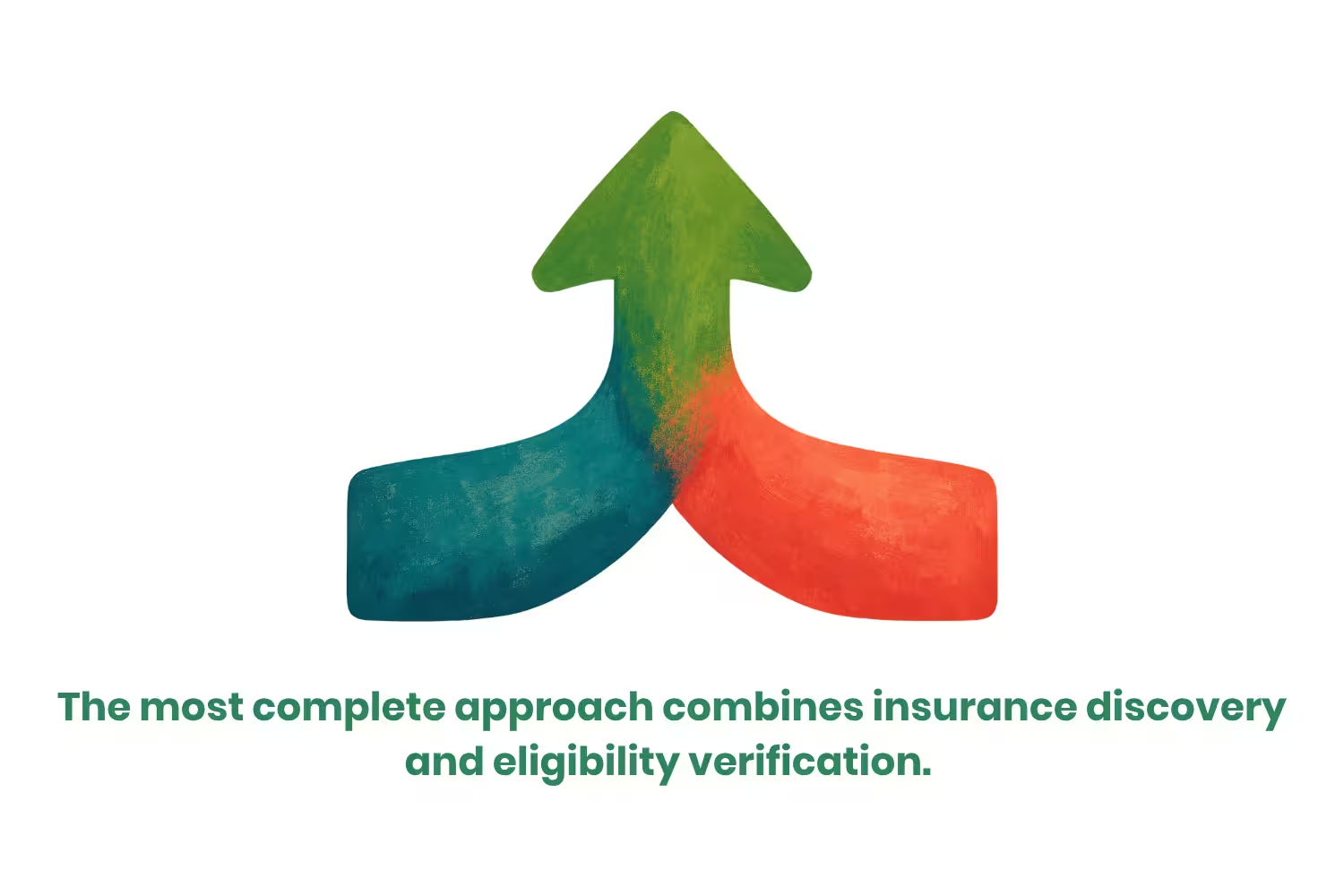
The most complete approach combines insurance discovery and eligibility verification. Do not treat them as separate, unrelated processes.
For example:
- Collect patient information. Gather available demographic and insurance information during registration.
- Verify known insurance. Run a health insurance eligibility verification check on the coverage the patient provided.
- Identify coverage gaps. If coverage is missing or you cannot verify it, decide whether an insurance discovery check makes sense.
- Discover potential coverage. Search available patient information for coverage the patient may not have reported.
- Verify discovered coverage Run eligibility verification on any potential coverage you find.
- Update the patient record Add verified coverage information to the patient's account.
- Bill the appropriate payer. Use the most accurate insurance information when you submit the claim.
This workflow keeps a "coverage not found" response from turning into a self-pay label right away. First, you check whether more coverage exists.
How Better Insurance Information Improves the Patient Experience
Insurance verification and discovery do more than improve the revenue cycle. They also shape the patient's experience.
When insurance information is incomplete or wrong, patients may need to give the same details many times. They may get bills they did not expect. They may learn about coverage issues after they receive care.
A fuller view of patient insurance helps providers fix these issues earlier.
Give Patients More Accurate Coverage Information
When you have accurate information, talking with patients about coverage becomes easier.
Verifying known coverage confirms the patient's plan and benefits. Insurance discovery can find coverage the patient did not give at registration.
Together, these processes give providers a better base for talking about insurance.
Reduce Unexpected Billing Issues
Insurance billing problems frustrate patients and revenue cycle teams alike.
A patient may think insurance will cover a service. Then the payer denies the claim, and the patient gets a bill. Verification and discovery cannot stop every denial or billing issue. But finding coverage information earlier helps providers fix some problems before they submit a claim.
That means fewer surprises, less follow-up, and a smoother billing experience for patients.
Build a More Complete Picture of Patient Insurance
Eligibility verification and insurance discovery solve different problems. They work best together. Etactics helps you use both to their fullest extent.
Eligibility verification confirms the insurance information you have. Insurance discovery helps find coverage you may not have.
Using both helps providers find coverage gaps, verify active insurance, and make better decisions.
The goal is not just to learn whether a patient has insurance. The goal is to build the most complete and accurate picture of their coverage. That means knowing when to verify the coverage you have and when to look for the coverage you don't.
Emphasize your product's unique features or benefits to differentiate it from competitors
In nec dictum adipiscing pharetra enim etiam scelerisque dolor purus ipsum egestas cursus vulputate arcu egestas ut eu sed mollis consectetur mattis pharetra curabitur et maecenas in mattis fames consectetur ipsum quis risus mauris aliquam ornare nisl purus at ipsum nulla accumsan consectetur vestibulum suspendisse aliquam condimentum scelerisque lacinia pellentesque vestibulum condimentum turpis ligula pharetra dictum sapien facilisis sapien at sagittis et cursus congue.
- Pharetra curabitur et maecenas in mattis fames consectetur ipsum quis risus.
- Justo urna nisi auctor consequat consectetur dolor lectus blandit.
- Eget egestas volutpat lacinia vestibulum vitae mattis hendrerit.
- Ornare elit odio tellus orci bibendum dictum id sem congue enim amet diam.
Incorporate statistics or specific numbers to highlight the effectiveness or popularity of your offering
Convallis pellentesque ullamcorper sapien sed tristique fermentum proin amet quam tincidunt feugiat vitae neque quisque odio ut pellentesque ac mauris eget lectus. Pretium arcu turpis lacus sapien sit at eu sapien duis magna nunc nibh nam non ut nibh ultrices ultrices elementum egestas enim nisl sed cursus pellentesque sit dignissim enim euismod sit et convallis sed pelis viverra quam at nisl sit pharetra enim nisl nec vestibulum posuere in volutpat sed blandit neque risus.
Use time-sensitive language to encourage immediate action, such as "Limited Time Offer
Feugiat vitae neque quisque odio ut pellentesque ac mauris eget lectus. Pretium arcu turpis lacus sapien sit at eu sapien duis magna nunc nibh nam non ut nibh ultrices ultrices elementum egestas enim nisl sed cursus pellentesque sit dignissim enim euismod sit et convallis sed pelis viverra quam at nisl sit pharetra enim nisl nec vestibulum posuere in volutpat sed blandit neque risus.
- Pharetra curabitur et maecenas in mattis fames consectetur ipsum quis risus.
- Justo urna nisi auctor consequat consectetur dolor lectus blandit.
- Eget egestas volutpat lacinia vestibulum vitae mattis hendrerit.
- Ornare elit odio tellus orci bibendum dictum id sem congue enim amet diam.
Address customer pain points directly by showing how your product solves their problems
Feugiat vitae neque quisque odio ut pellentesque ac mauris eget lectus. Pretium arcu turpis lacus sapien sit at eu sapien duis magna nunc nibh nam non ut nibh ultrices ultrices elementum egestas enim nisl sed cursus pellentesque sit dignissim enim euismod sit et convallis sed pelis viverra quam at nisl sit pharetra enim nisl nec vestibulum posuere in volutpat sed blandit neque risus.
Vel etiam vel amet aenean eget in habitasse nunc duis tellus sem turpis risus aliquam ac volutpat tellus eu faucibus ullamcorper.
Tailor titles to your ideal customer segment using phrases like "Designed for Busy Professionals
Sed pretium id nibh id sit felis vitae volutpat volutpat adipiscing at sodales neque lectus mi phasellus commodo at elit suspendisse ornare faucibus lectus purus viverra in nec aliquet commodo et sed sed nisi tempor mi pellentesque arcu viverra pretium duis enim vulputate dignissim etiam ultrices vitae neque urna proin nibh diam turpis augue lacus.
![[ANSWERED] What is allowed amount in medical billing?](https://cdn.prod.website-files.com/67e2b8210878abcba6f91ae6/6a5a4d5faf15c04c136c5f87_WhatisAllowedAmountinMedicalBilling_726.avif)