
14 Trailblazing Medical Appointment Transportation Services
Although Medicaid does cover non-emergency medical transportation (NEMT) for eligible members. While this helps some, it doesn’t benefit all. Here are 14 trailblazing medical appointment transportation services.

Getting scheduled appointments is hard enough as it is. But having your clients show up is an entirely different challenge unto itself.
This issue often stems from a lack of transportation. Up to 30% of all no-show patients say that not having a ride is the reason for skipping their appointment.
It isn’t beneficial to anyone when your clients can’t get to their appointments. Your clients lose out on valuable and often necessary care. It also wastes time, which is an unnecessary cost. This type of no-show costs the health industry up to $150 billion in lost revenue each year. Each unused appointment time costs a doctor $200 on average.
But there’s one simple solution that could reduce most of these issues; offering rides. Partnering with just one rideshare company could lead to a 27% reduction in no-show rates within one year.
However, Medicaid does cover non-emergency medical transportation (NEMT) for eligible members. While this helps some, it doesn’t benefit all. Here are 14 trailblazing medical appointment transportation services.
Driving Patients to Appointments
Uber Health
Health information technology supplier Cerner teamed up with Uber to get people to and from healthcare appointments. The Uber Health app integrates Cerner’s electronic health record system to allow easy access for physicians.
Doctors can schedule rides on behalf of their clients wherever Uber service is available. That way, people don’t need the app or even a smartphone to use this service.
The patient’s name, phone number, and pick-up address will auto-populate from Cerner technology into the Uber ride request. Providers receive real-time updates to view patient pick-up time and when they’re set to arrive to keep everything on schedule.
Not only is the service available to the general public, but it’s also an option for employees. The tool can help get crucial staff to and from work.
Johnson Health Center
Johnson Health Center in Virginia offers free rides to and from medical appointments for all their clients. The service started in 2017 for Amherst County and Lynchburg. But in 2019, it expanded to include Bedford and Campbell counties.
A grant from Centra Health enabled Johnson Health Center to buy a second van to expand the service. Their hours Monday through Thursday from 7 am to 7 pm and on Fridays for specialty refferal appointments.
Ride Health
The startup company Ride Health is trying to reduce the number of missed health visits. The ride coordination startup connects health plans and healthcare providers to transportation options. These include rideshares like Uber.
The purpose is to help companies with the nuanced work of transportation requests. The platform coordinates the entire experience. It helps users from request intake to billing and payment.
Ride Health is currently only offering rides non-emergency appointments. But they’ve mentioned that they haven’t ruled out emergencies as a future option.
Express Medical Transporters
This service offers a variety of non-emergency transportation options. Express Medical Transporters has over 350 non-emergency medical vans. These include stretcher and wheelchair assistance vans, as well as ambulatory vans.
Their service places a special focus on helping cancer and dialysis patients. Express Medical Transporters also offers specialty help. This means they have services for those with special needs and disabilities.
The services offer private-pay or Medicaid billing solutions. It offers flexible timing with any odd appointment times and discharge schedules with its 24-7 capabilities.
Not only is what they offer available for medical needs, but they’re also assisting schools. Express Medical Transporters offers the following to schools…
- Pick-ups and drop-offs
- Trained assistance for students with special needs and disabilities
- Out-of-district rides
- Homeless student assistance under the McKinney-Vento Act
- Wheelchair assistance with lift-equipped vehicles
GoGo Grandparent
Some elderly people have difficulty getting to and from their appointments because they are unable to drive. Half of Americans 65 years and older don’t have access to public transportation.
Older generations aren’t as familiar with smartphones and technology in general. In other words, using many of I’ve mentioned so far is harder for them.
But GoGo Grandparent is helping the elderly get the care they need. They enable users to receive a ride from Uber or Lyft without a smartphone to access the app. Instead, a 24/7 operator connects users to these rideshares. It also keeps emergency contacts in the loop through message alert updates.
When users call to receive a service, they have several options for pickup. These include:
- Immediately request a Lyft or Uber to their home
- Request a Lyft or Uber to where they were last dropped off
- Request a Lyft or Uber to a customer pick up location that users can set up once they’re registered
- Request a Lyft or Uber with an operator
- Speak with an operator to schedule requests in advance
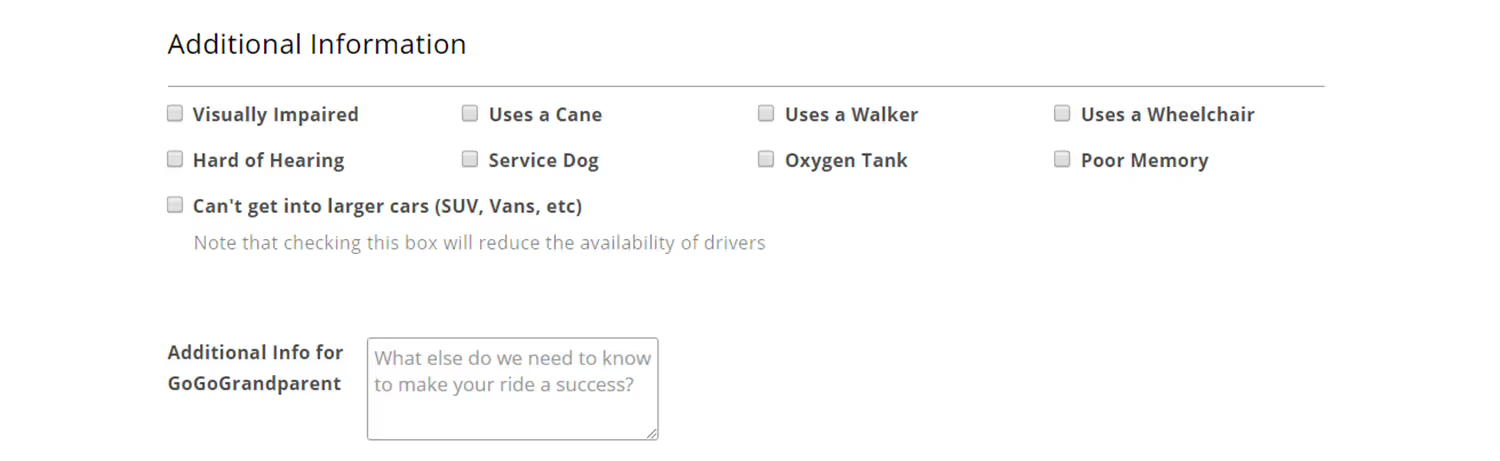
When filling out the form online, patients can select other information that is useful for connecting them to their ride.
One shortfall with this service is that Uber and Lyft drivers don’t need to help passengers in or out of the vehicle. If elderly passengers need help with this, they need someone else to help them.
GoGo is also a tax-deductible medical expense.
The company also has other services available to seniors…
- GoGoGourmet delivers meals
- GoGoGroceries delivers groceries, both right to users’ doorsteps
GoGo offers reduced rates on meal and grocery delivery requests.
Going Places Van
The Going Places Van in Erie County, New York is also helping the elderly get to their appointments.
The curb-to-curb van service is available to seniors who can’t drive themselves. Wheelchair-accessible vans are available upon request when scheduling a ride.
There’s a brief registration that all users complete before using a service. Non-emergency, health-related trips must be scheduled two weeks before any appointment. The van also provides non-medical trips which seniors can schedule one week prior. These non-medical visits include:
- Food and nutrition (Stay Fit Dining Sites or grocery stores)
- Personal business (banking, bill-paying, Social Services, legal assistance, etc.)
- Social activities such as for recreational purposes or volunteer opportunities
Monetary contributions are always voluntary which go toward expanding the program.
Tendercare of VA
In Richmond, Virginia, Tendercare recognizes the importance of care for the elderly. It uses vehicles that can handle both stretcher and wheelchair requests. Because they have many vehicles, they can add vehicles when necessary or substitute them out if one in their main fleet needs repairs.
Tendercare uses current GPS technology, ensuring that patients are on-time for their visits. The company also takes pride in its safety measures. They make frequent checks of their vehicles and hydraulic wheelchair lifts.
Providing quality care is particularly important for their service. Their stretcher transport team received training for proper patient movement techniques. All drivers are medical technicians or volunteer first responders because they want to offer a safe service.
According to its website, Tendercare even provides long-distance rides. They offer their services across the country, stating that “no distance is too far or out of range” for their capabilities.
Tendercare expanded its offering to not only provide rides to appointments, but also mobility products. These include wheelchair ramps, stairlifts, and vertical platform lifts. They sell, rent, and install these products. They also offer financing options for those on tight budgets, especially with retirement.
LogistiCare
LogistiCare states that they’re the nation’s largest non-emergency medical transportation manager. Organizations use LogistiCare to manage their NEMT programs by working with all involved parties. LogistiCare often helps states and organizations solve community healthcare challenges.
Health professionals can book rides for their clients, but families and social workers can also schedule rides. LogistiCare ensures users are eligible and that they receive the services they need to get where they need to.
LogistiCare monitors all rides by using GPS tracking safety and random curbside checks.
Circulation Health
LogistiCare acquired Circulation Health which offers a few different options. Patients can receive rides to their medical clinic for an appointment, or to their home after hospital discharge. When the health administrator calls the patient to confirm the appointment, they can say whether or not they have a ride. The administrator will then order a ride for them through Circulation.
The patient can also inform their insurance provider that they need a ride to an upcoming appointment. This provider then books the ride on the patient’s behalf. Rides are automatically matched with the users’ needs, such as if they need a wheelchair accessible vehicle. Currently, patients can’t order rides for themselves, but Circulation is working towards an app that will allow this.
Circulation has a 91% on-time rate. On average, the system reduces no-shows by 68% and satisfaction is rated at 4.9 out of 5. The website has a tool that estimates the increase in revenue by using this service as a provider.
Roundtrip
Roundtrip provides online tools that make it easy for health professionals to order rides for their clients. The solution connects patients to NEMT.
Providers can book the rides on-demand or months in advance to coincide with. These requests get sent to Roundtrip’s digital marketplace.
A transportation provider from the company’s network can then view the ride, offer an estimated time of arrival, and claim the trip. Roundtrip sends a reminder to the patient with the ride status once it’s scheduled.
The company uses a 24-7 Navigation Center to monitor rides and ensure patients get to their destination. Their health partners report no-show rates of less than 4%, five times better than the national average.
Kaizen Health
Kaizen Health helps care coordinators with scheduling after hospital discharges and appointments. Their workflow is like Roundtrip and Circulation. Providers schedule rides, a reminder gets sent to the patient, and then they receive the service.
Kaizen Health offers a wide variety of options:
- Rideshare/taxi
- Vehicles with infant/child car seats of all stages
- Small buses
- Non-emergency ambulances
- Wheelchair accessible vehicles
- Courier services
Appointments to Patients
South Shore Health
South Shore Health of Massachusetts launched a mobile health team to bring hospital care to the homes of those who require chronic care.
This service is beginning in Weymouth, MA but will possibly expand to other towns. The team consists of mobile health paramedics who completed over 300 hours of training for the program.
The focus is on those with congestive heart failure, chronic obstructive pulmonary disease, and complex wounds who would have frequent hospital visits but have difficulty getting there.
South Shore Health identified nearly 100 individuals who could benefit from mobile health. They are reaching out to them about the voluntary program. It’s a proactive approach to help these patients before they feel the need to call 911 by providing care right from their homes.
This service won’t be an additional cost since it’s paid for by South Shore Hospital as part of a $10 million donation. The mobile health unit will save money by reducing emergency room trips and lengthy hospitalizations.
Madera Unified School District Mobile Clinic
Madera County, California has a mobile health center bus available to schools in the Madera Unified School District. This bus is a wheelchair-accessible unit that resembles a fancy tour bus.
The vehicle can offer vaccinations, vision and auditory screenings, athletic physicals, counseling sessions, and more. Schools nurses and clinicians can use the bus as well as community partners such as Camarena Health.
School district staff said they needed the mobile center since many of them are low on space. Some of the schools are in rural areas where the students’ families have difficulty traveling to care-providers.
Heal App
Heal is an app that brings a doctor’s right to their patients’ homes. The app displays different medical services available for users to select. Within two hours of the request, a doctor or technician will come to the patient’s home to administer treatment.
Each visit costs $159, but nearly 20 insurances reportedly cover their service. The app eliminates sitting in waiting rooms for hours before treatment is available. It also helps those who feel too sick to drive themselves to the doctor.
It reduces patients coming into the doctors’ office with contagious illnesses, such as the flu, who might spread the illness to others.
Conclusion
Over 3.6 million patients miss their appointments each year because they can’t get to them.
This barrier prevents them from getting necessary care. But we’ve seen many new innovative medical appointment transportation services to combat this problem. As this trend continues, more providers will partner with companies that offer these services so their patients don’t miss their visits.
Patient no-shows are an unavoidable issue that no medical practice wants. It leads to lost revenue for the practice and wasted appointment times that other patients need.
Emphasize your product's unique features or benefits to differentiate it from competitors
In nec dictum adipiscing pharetra enim etiam scelerisque dolor purus ipsum egestas cursus vulputate arcu egestas ut eu sed mollis consectetur mattis pharetra curabitur et maecenas in mattis fames consectetur ipsum quis risus mauris aliquam ornare nisl purus at ipsum nulla accumsan consectetur vestibulum suspendisse aliquam condimentum scelerisque lacinia pellentesque vestibulum condimentum turpis ligula pharetra dictum sapien facilisis sapien at sagittis et cursus congue.
- Pharetra curabitur et maecenas in mattis fames consectetur ipsum quis risus.
- Justo urna nisi auctor consequat consectetur dolor lectus blandit.
- Eget egestas volutpat lacinia vestibulum vitae mattis hendrerit.
- Ornare elit odio tellus orci bibendum dictum id sem congue enim amet diam.
Incorporate statistics or specific numbers to highlight the effectiveness or popularity of your offering
Convallis pellentesque ullamcorper sapien sed tristique fermentum proin amet quam tincidunt feugiat vitae neque quisque odio ut pellentesque ac mauris eget lectus. Pretium arcu turpis lacus sapien sit at eu sapien duis magna nunc nibh nam non ut nibh ultrices ultrices elementum egestas enim nisl sed cursus pellentesque sit dignissim enim euismod sit et convallis sed pelis viverra quam at nisl sit pharetra enim nisl nec vestibulum posuere in volutpat sed blandit neque risus.
Use time-sensitive language to encourage immediate action, such as "Limited Time Offer
Feugiat vitae neque quisque odio ut pellentesque ac mauris eget lectus. Pretium arcu turpis lacus sapien sit at eu sapien duis magna nunc nibh nam non ut nibh ultrices ultrices elementum egestas enim nisl sed cursus pellentesque sit dignissim enim euismod sit et convallis sed pelis viverra quam at nisl sit pharetra enim nisl nec vestibulum posuere in volutpat sed blandit neque risus.
- Pharetra curabitur et maecenas in mattis fames consectetur ipsum quis risus.
- Justo urna nisi auctor consequat consectetur dolor lectus blandit.
- Eget egestas volutpat lacinia vestibulum vitae mattis hendrerit.
- Ornare elit odio tellus orci bibendum dictum id sem congue enim amet diam.
Address customer pain points directly by showing how your product solves their problems
Feugiat vitae neque quisque odio ut pellentesque ac mauris eget lectus. Pretium arcu turpis lacus sapien sit at eu sapien duis magna nunc nibh nam non ut nibh ultrices ultrices elementum egestas enim nisl sed cursus pellentesque sit dignissim enim euismod sit et convallis sed pelis viverra quam at nisl sit pharetra enim nisl nec vestibulum posuere in volutpat sed blandit neque risus.
Vel etiam vel amet aenean eget in habitasse nunc duis tellus sem turpis risus aliquam ac volutpat tellus eu faucibus ullamcorper.
Tailor titles to your ideal customer segment using phrases like "Designed for Busy Professionals
Sed pretium id nibh id sit felis vitae volutpat volutpat adipiscing at sodales neque lectus mi phasellus commodo at elit suspendisse ornare faucibus lectus purus viverra in nec aliquet commodo et sed sed nisi tempor mi pellentesque arcu viverra pretium duis enim vulputate dignissim etiam ultrices vitae neque urna proin nibh diam turpis augue lacus.