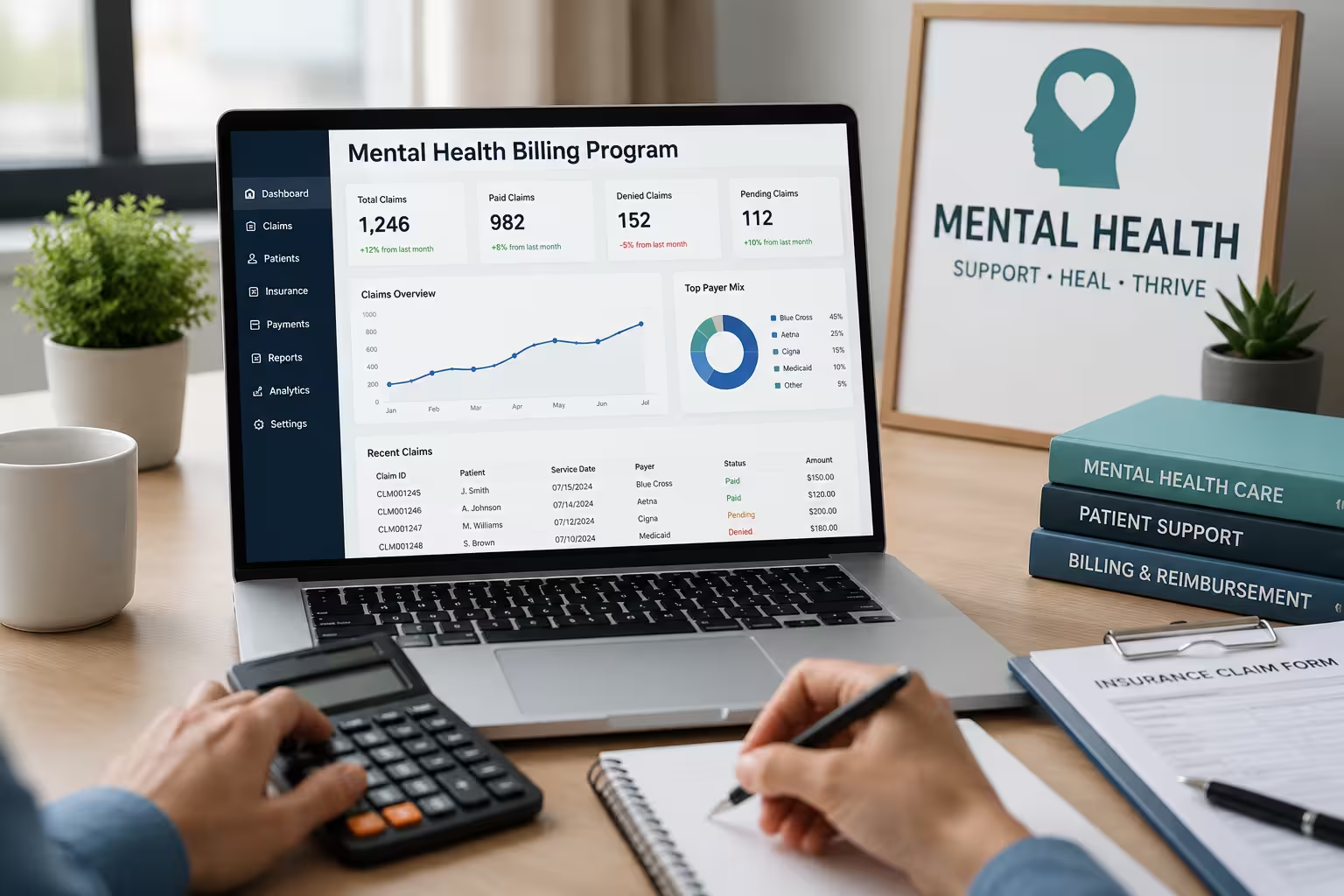
Hospital Revenue Cycle Management: Features Every Modern RCM Platform Should Have
**Post Excerpt:** Learn how modern hospital revenue cycle management software helps healthcare organizations reduce claim denials, improve reimbursement, automate workflows, and strengthen financial performance. Discover the key features to look for when evaluating an end-to-end RCM platform.

In 2025, hospitals spent 43 billion USD trying to collect payments from payers. Claim denials and evolving billing and coding rules were largely the culprit. For today's hospitals, maintaining a healthy financial foundation can be a challenge. Many healthcare organizations find themselves struggling to stay above water. Especially as administrative demand and cost continue to grow. With disconnected systems, increasing revenue seems like a tall order to fill.
That's where hospital revenue cycle software comes in. Modern revenue cycle management software helps hospitals manage the entire revenue cycle. From scheduling and eligibility verification to billing, claim management, and payment posting. You no longer need to rely on multiple applications to complete these tasks. An integrated RCM platform connects these processes into a single workflow. Helping organizations improve operational efficiency while reducing manual work.

The result is more than just faster payments. Effective healthcare revenue cycle management helps organizations:
- Reduce denials.
- Improve reimbursement.
- Automate repetitive tasks.
- Strengthen cash flow.
- Provide detailed reporting.
- Create a better patient experience.
Today we'll explore the essential features of modern revenue cycle management solutions. As well as why an end-to-end revenue cycle approach matters. We will also discuss what you should consider when selecting the right RCM tools. Let's get into it!
What Is Hospital Revenue Cycle Software?
Hospital revenue cycle software helps manage the financial side of healthcare. From the moment a patient schedules an appointment to collecting payment. It is no longer sustainable to treat billing as a standalone process. That's why modern healthcare revenue cycle management software prioritizes connecting all processes.
This includes insurance verification and coding and claim submission. Also, payment posting, just to name a few. Every step depends on accurate information from the one before it. Even a small mistake can delay reimbursement and create unnecessary administrative work.
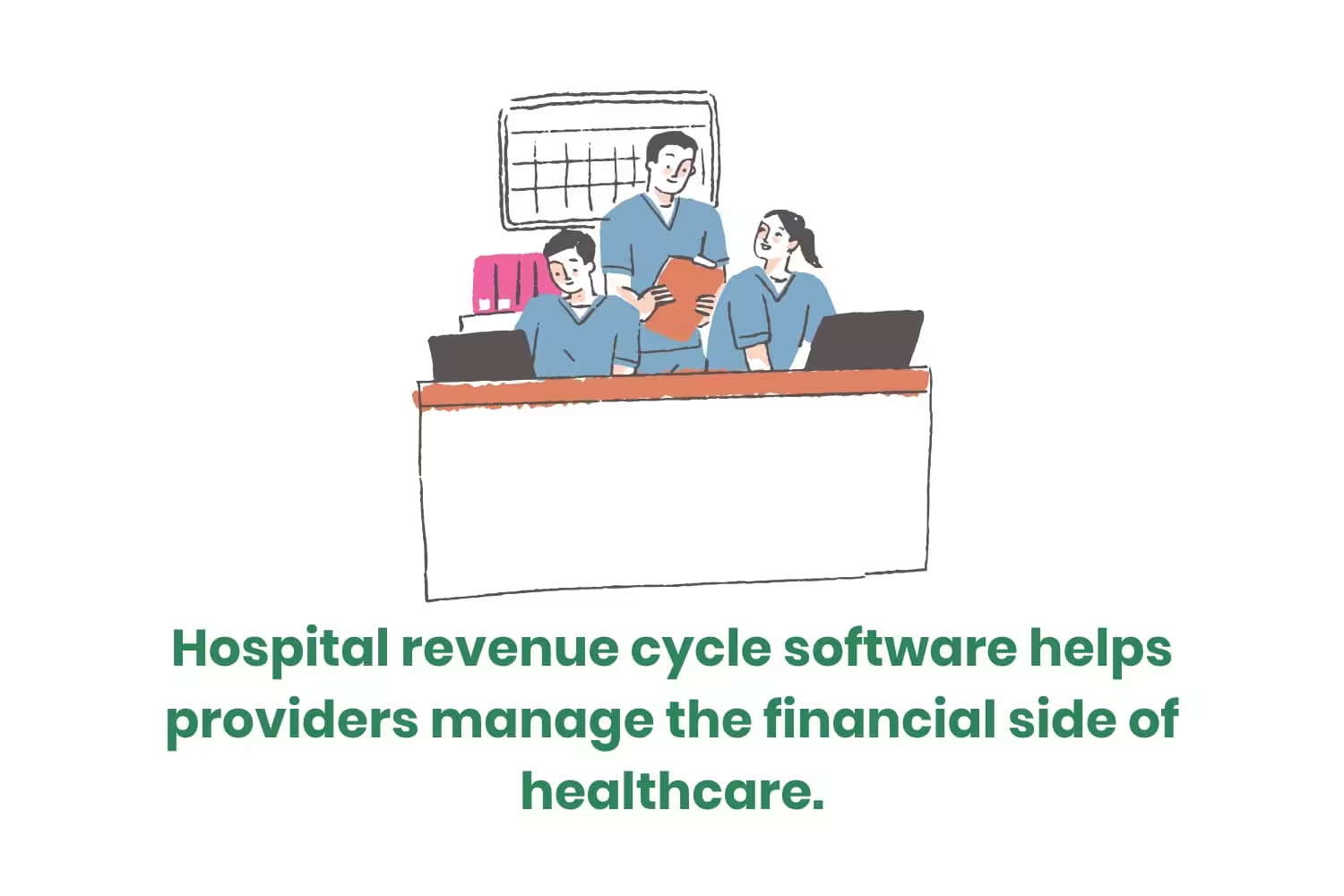
Revenue cycle management platforms simplify your workflow. By bringing everything together in one platform, you can track the full revenue cycle. Helping you identify issues earlier and access real-time information that supports better decision-making.
As payer requirements evolve, hospitals need more than software that can submit claims. They need healthcare revenue cycle management solutions that help facilitate revenue growth. By improving visibility, automating work, and helping teams manage the healthcare landscape.
Why Do Healthcare Organizations Need An End-to-End RCM?
Healthcare organizations need RCM systems to plug the revenue cycle into one workflow. An integrated platform allows information to move seamlessly between departments. This improves data accuracy, strengthens communication, and helps organizations collect revenue faster.
Without this approach, disconnected systems often create a multitude of errors and roadblocks. Including duplicate data entry, inconsistent reporting, manual reconciliation, and fragmented workflows. These inefficiencies increase administrative costs. All while contributing to revenue leakage and preventable claim errors.

An aligned RCM strategy eliminates these challenges. Giving every department access to the same accurate, up-to-date information. Your staff can work from a single source of truth. Improving collaboration and reducing errors throughout the revenue cycle.
This approach also supports automation for time-consuming tasks. A few common obstacles are eligibility verification, claim submission, and denial management. As a result, healthcare organizations can manage these tasks and improve cash flow.
Features Your Revenue Cycle Management Software Platform Should Have
Not all RCM software offers the same capabilities. In fact, some only focus on medical billing solutions. However, the top revenue cycle management platforms should support the entire patient journey. Through automation, analytics, and integrated workflows.
When evaluating these solutions, healthcare leaders should look for certain features. You want the technology that improves financial performance while reducing administrative complexity. The right solution should help organizations run smoothly while not being overly complicated. Let's look at some of the main features to consider while shopping around.
Eligibility Verification
Eligibility verification is the first step in successful healthcare revenue cycle management. It confirms insurance coverage, validates benefits, and checks payer requirements before providing services.
Modern revenue cycle management platforms perform real-time insurance verification. Staff can identify coverage issues immediately instead of discovering them by submitting the claim. This helps create a clean claim. Doing this reduces manual corrections and improves the accuracy of patient cost estimates.
Automating eligibility verification also helps healthcare organizations keep up with changing payer rules. It improves scheduling efficiency and prevents reimbursement delays before they happen.

Claim Management and Billing Automation
Accurate claim management is essential to maintaining healthy financial performance. Modern revenue cycle management software helps automate these processes through:
- Claim scrubbing.
- Automated edits.
- Streamlined claim submission workflows.
Built-in validation checks identify missing information before sending out claims. This increases the likelihood of submitting a clean claim on the first attempt.
Automation also supports more effective denial management by identifying denial trends. Combined with automated payment posting, these capabilities help organizations strengthen their financial health. This strategy helps collect reimbursement, reduce denials, and improve your financial performance.

AI-Driven Revenue Cycle Automation
Artificial intelligence is transforming how hospitals manage the financial side of healthcare. AI-driven RCM automation and predictive analysis accelerates workflows and boosts financial outcomes.
For example, AI can focus on claims that need immediate attention. It can also identify patterns contributing to denials and recommend workflow improvements. Strengthening your system before financial issues escalate.
By reducing repetitive RCM tasks, organizations can improve productivity. While allowing staff to focus on complex cases that need human expertise.
Analytics and Workflow Optimization
Financial data alone doesn't improve performance. You need to be able to turn it into actionable information. Leading RCM platforms include advanced analytics that provide actionable insights.
These help report on important metrics. These include claim performance, denial rates, cash flow, and reimbursement timelines. Analytics dashboards help healthcare leaders identify issues quickly. Easily track key performance indicators and make informed decisions that improve revenue performance.
How Do I Choose the Right RCM Solution?
Selecting the right RCM solution requires more than comparing feature lists. You should check how well a platform supports current operations and future growth.
Integration is one of the most important considerations. The software should connect seamlessly with existing systems. Such as practice management systems, practice management and EHR systems. This is to cut out duplicate work. As well as maintain accurate information throughout the entire revenue cycle.
Scalability is also important. Your software should be able to handle your organization's growth. Especially as you expand services and increase your patient volume. The last thing you want is to lock into a platform that you will have to change in a few years.
Finally, organizations should evaluate the features that I mentioned earlier. Like those that support automation capabilities, reporting tools, implementation support, and long-term partnership. The best RCM tools help in more ways than one.
Why Hospitals Choose Etactics as Their RCM Platform
The goal of hospital RCM solutions is not simply to process transactions. It is to help organizations create a more efficient and financially sustainable operation. By better streamlining accounts receivable collections and supporting steady cash flow. A strong RCM solution, like Etactics, helps address some of the biggest challenges.
Reduce Preventable Denials
Denials are one of the largest obstacles to maintaining healthy revenue performance. Bogus data can easily contribute to lost reimbursement. Examples might include incorrect patient information, coding errors, and missing documentation.
RCM features help organizations catch incorrect data before sending claims to the payer. Through automated claim validation, claim scrubbing, and improved visibility into denial trends. This is an effective measure to avoid denials before they happen.
Effective denial management tools help healthcare teams understand why claims fail. They improve processes and create a more proactive approach to collecting reimbursement.
Improve Revenue Cycle Visibility
Hospitals need clear visibility into their revenue cycle to improve financial performance. When you spread across many systems, it becomes difficult to identify key indicators. Such as delays, bottlenecks, and inefficiencies. This can slow reimbursement and make it harder to find opportunities for improvement.
A centralized RCM platform brings financial and operational data together in one place. Healthcare leaders can watch these trends through a single dashboard. With better visibility, they can make more informed decisions. Helping to resolve issues faster and improve long-term financial outcomes.
Streamline Administrative Workflows
Hospital staff spend countless hours on repetitive administrative tasks. This tends to slow the revenue cycle and increase costs. Automation streamlines most of these processes. Allowing for your team to spend less time on manual work and more time supporting patients. RCM features automate tasks like insurance verification, claim reviews, patient billing, and more.
Enhance the Patient Financial Experience
The revenue cycle impacts more than an organization's finances. It also affects the patient experience.
Patients expect clear communication, accurate billing, and convenient payment options. If you can't offer these, they will go somewhere else. Fewer administrative delays help create a smoother financial journey for patients. Leading to enhanced patient satisfaction.
An improved workflow means more time focused on important matters. Like delivering quality patient care.
Complete RCM Services and Software for Modern Hospitals in One Platform
Successful revenue cycle management requires more than technology alone. Hospitals need solutions that combine multiple RCM capabilities. Such as automation, expertise, and ongoing optimization to support long-term success.
End-to-end revenue cycle management services help organizations improve overall performance. Providing the tools and support needed to manage every step in one platform. Whether you need to improve claim accuracy or strengthen payment workflows. The right combination of technology and expertise can make a measurable difference.
Etactics provides flexible RCM services that help organizations simplify their day-to-day tasks. Our team helps you manage financial operations while keeping workflows moving seamlessly. With responsive customer support and a focus on your needs, we help you stay efficient. Through our connected solutions, you can improve your current financial standing all while tracking progress.
Organizations need an RCM partner that can adapt alongside them. The right platform should provide the flexibility to support your operational demands.
Emphasize your product's unique features or benefits to differentiate it from competitors
In nec dictum adipiscing pharetra enim etiam scelerisque dolor purus ipsum egestas cursus vulputate arcu egestas ut eu sed mollis consectetur mattis pharetra curabitur et maecenas in mattis fames consectetur ipsum quis risus mauris aliquam ornare nisl purus at ipsum nulla accumsan consectetur vestibulum suspendisse aliquam condimentum scelerisque lacinia pellentesque vestibulum condimentum turpis ligula pharetra dictum sapien facilisis sapien at sagittis et cursus congue.
- Pharetra curabitur et maecenas in mattis fames consectetur ipsum quis risus.
- Justo urna nisi auctor consequat consectetur dolor lectus blandit.
- Eget egestas volutpat lacinia vestibulum vitae mattis hendrerit.
- Ornare elit odio tellus orci bibendum dictum id sem congue enim amet diam.
Incorporate statistics or specific numbers to highlight the effectiveness or popularity of your offering
Convallis pellentesque ullamcorper sapien sed tristique fermentum proin amet quam tincidunt feugiat vitae neque quisque odio ut pellentesque ac mauris eget lectus. Pretium arcu turpis lacus sapien sit at eu sapien duis magna nunc nibh nam non ut nibh ultrices ultrices elementum egestas enim nisl sed cursus pellentesque sit dignissim enim euismod sit et convallis sed pelis viverra quam at nisl sit pharetra enim nisl nec vestibulum posuere in volutpat sed blandit neque risus.
Use time-sensitive language to encourage immediate action, such as "Limited Time Offer
Feugiat vitae neque quisque odio ut pellentesque ac mauris eget lectus. Pretium arcu turpis lacus sapien sit at eu sapien duis magna nunc nibh nam non ut nibh ultrices ultrices elementum egestas enim nisl sed cursus pellentesque sit dignissim enim euismod sit et convallis sed pelis viverra quam at nisl sit pharetra enim nisl nec vestibulum posuere in volutpat sed blandit neque risus.
- Pharetra curabitur et maecenas in mattis fames consectetur ipsum quis risus.
- Justo urna nisi auctor consequat consectetur dolor lectus blandit.
- Eget egestas volutpat lacinia vestibulum vitae mattis hendrerit.
- Ornare elit odio tellus orci bibendum dictum id sem congue enim amet diam.
Address customer pain points directly by showing how your product solves their problems
Feugiat vitae neque quisque odio ut pellentesque ac mauris eget lectus. Pretium arcu turpis lacus sapien sit at eu sapien duis magna nunc nibh nam non ut nibh ultrices ultrices elementum egestas enim nisl sed cursus pellentesque sit dignissim enim euismod sit et convallis sed pelis viverra quam at nisl sit pharetra enim nisl nec vestibulum posuere in volutpat sed blandit neque risus.
Vel etiam vel amet aenean eget in habitasse nunc duis tellus sem turpis risus aliquam ac volutpat tellus eu faucibus ullamcorper.
Tailor titles to your ideal customer segment using phrases like "Designed for Busy Professionals
Sed pretium id nibh id sit felis vitae volutpat volutpat adipiscing at sodales neque lectus mi phasellus commodo at elit suspendisse ornare faucibus lectus purus viverra in nec aliquet commodo et sed sed nisi tempor mi pellentesque arcu viverra pretium duis enim vulputate dignissim etiam ultrices vitae neque urna proin nibh diam turpis augue lacus.