
The Surprising List of Disadvantages of Patient Portals
Despite patient portals, most adults still aren’t using these services. Even though they should improve communication, there are also disadvantages to patient portals.

As of 2020, nearly 40% of adults in the United States access their health records through a patient portal. This is up from the 25% of adults who used these portals in 2014.
Since digital options are becoming more available in the health industry, it’s no surprise that there was an increase. It also may not come as a shock since younger, tech-savvy people are now adults with control over their healthcare.
Patient portals are secure websites that give people access to their personal health information from anywhere, at any time. People can log on to their account to view their PHI such as lab results, immunizations, prescriptions, appointment visit notes.
Some portals have even more helpful options. Patients may be able to schedule or cancel appointments, pay their bills online, request prescription refills, and more.
But despite these convenient tools, most adults still aren’t using these services. Even though they should improve communication, there are also disadvantages to patient portals.
Getting Patients to Opt-In
It’s a disadvantage of both the provider and patient when clients decide not to use a patient portal. Patients are missing out on the potential benefits available to them. Providers also need to spend more time going over information with the patient that they could just access on the portal.
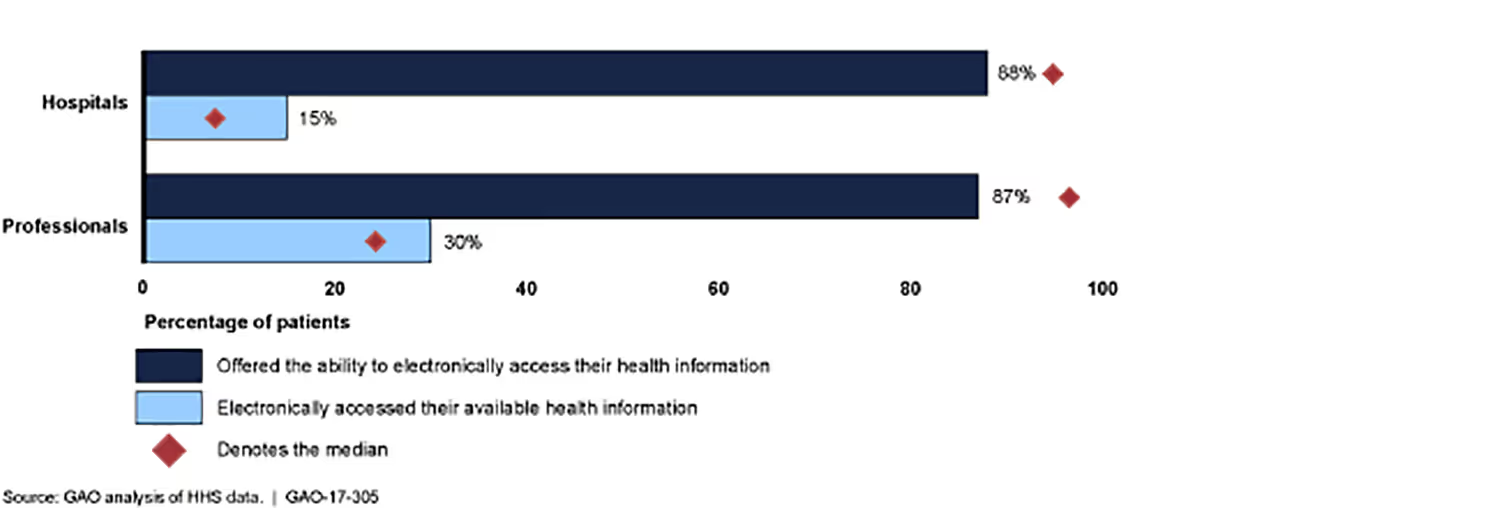
But unfortunately, getting people to opt-in is one of the biggest challenges for providers when it comes to these online tools. Even though a doctor may see the benefits, that doesn’t mean their patients will. A 2017 report found that even though almost 90% of providers offered access to patient portals, only 30% of patients were using them.
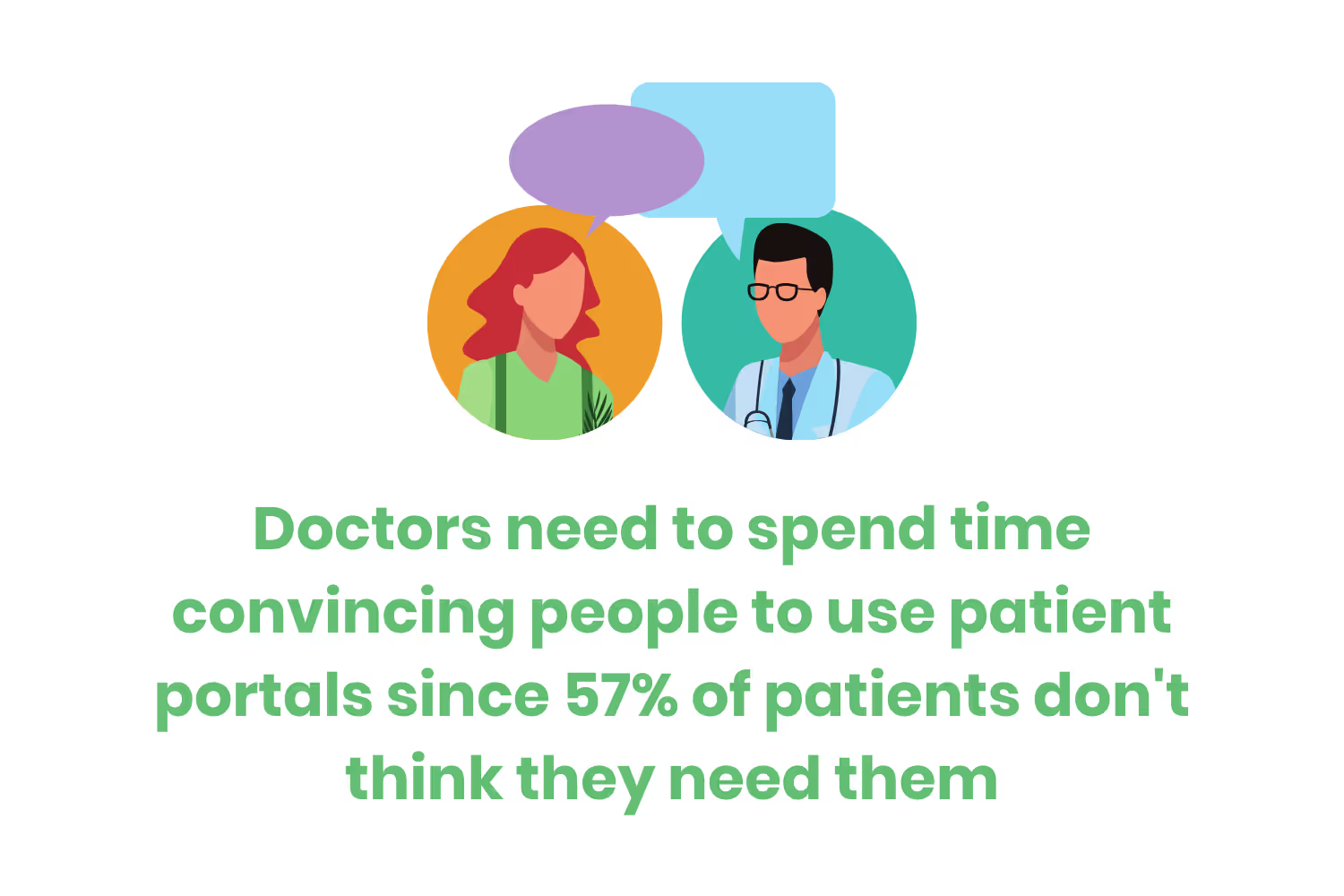
Getting patients to use these tools can be a challenge for many reasons. But according to the AMA, 57% of patients say they don’t need to use them. If over a majority think this, then of course it will be difficult getting them to opt-in. This means they’ll miss out on helpful tools, and doctors waste time by upkeeping these portals.
Security Concerns
The AMA also says that security concerns are the reason why 22% of people aren’t taking advantage of these services. These concerns were more common in patients over 40 years old.
Patient portals are just another place for hackers to attack. Since healthcare information is so valuable to hackers, they’ll more likely target these accounts that host so much PHI.
The more online accounts that someone has, the greater chance that one will get compromised. Since the average person reuses each password up to 14 times, a hacker can more easily get into a user’s account. After all, 81% of hacks are due to poor password management.
This security risk poses a challenge for patients and providers. Patients need to be cautious and maintain strong password management to keep their accounts secure.
This also means understanding the security risk of logging on when using an unsecured/public network. Since patients need to be so cautious to avoid risks, they may simply avoid these portals altogether.
There’s also work for providers. They need to ensure that these sites have all necessary protections in place so that they remain HIPAA-compliant. Patient portals require encryption since they allow creating, receiving, maintaining, and transmitting PHI. While HIPAA doesn’t give specific password requirements, providers also need to consider account login safety.
This could mean implementing multi-factor authentication to further protect accounts. 93% of healthcare organizations use traditional authentication methods, such as username and password. But fewer than two-thirds said they used multi-factor authentication.
Even though practices don’t need to use multi-factor authentication, it’s another layer of security. If there are more protections in place, the provider can ease the patients’ concerns about privacy risks.

User Confusion and Anxiety
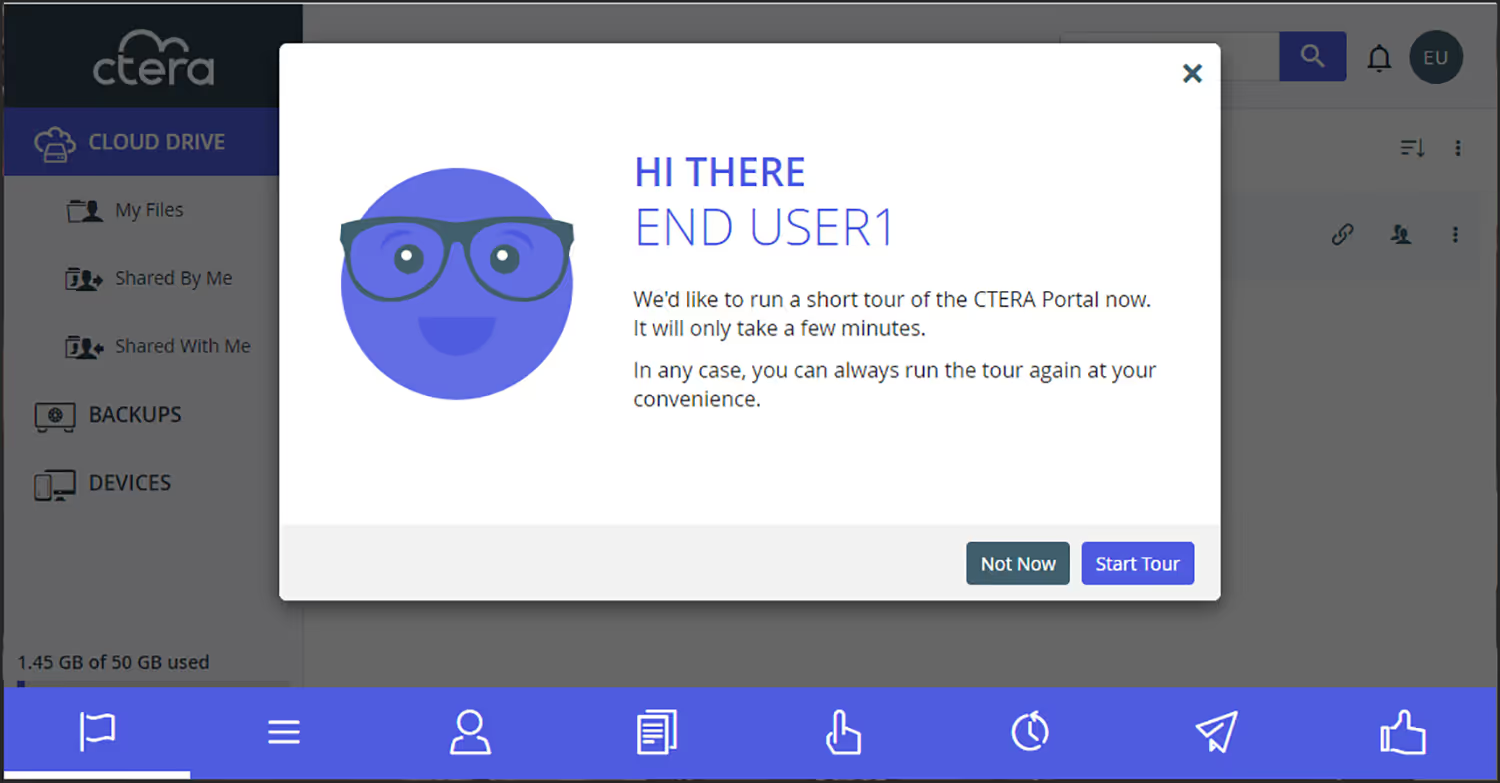
There’s always the risk of confusion when using a new online platform. Trying to learn all the functionalities can take some time. This is why some accounts offer new user tours to guide the person through all of the features.
But this isn’t the only confusion that people face when it comes to patient portals. Practically half of the US adult population lacks health literacy. If a user doesn’t understand the medical terms within their health records, they’ll likely get confused.
But it can also cause them to worry. These portals often display medical tests and lab results, so people will check when the provider posts these. Since many people lack health literacy, they may inaccurately interpret the results and start to have concerns. One study found that abnormal test results caused confusion, anxiety, and concerns for 56% of people. Even 21% of people who had normal results also felt confused and anxious.
Since the patient doesn’t have a medical professional with them to explain the results, it leads them to speculate. They may then start to Google what this could mean which causes even more panic depending on what they find. Without someone to accurately explain a diagnosis, people will start to think the worst.
This may lead to even more work for the doctor. If you’re a patient that gets worried about your health results, you’ll likely call your doctor for more details. You might even set up an entire appointment to discuss it with them.
Providing medical records online should reduce the time that providers need to spend with patients. But tending to those who became concerned or confused from the portal has the opposite effect.
Alienation and Health Disparities
Other disadvantages of patient portals include alienation and health disparities. Alienation between patient and provider occurs for those who don’t access these tools. Sometimes, this is due to health disparities if a person doesn’t have a method for using them.
People with lower health literacy are more resistant to using online tools. It would lead to more confusion as I mentioned before. Since they have difficulty interpreting what their health information means, they’ll simply choose not to use this tool.
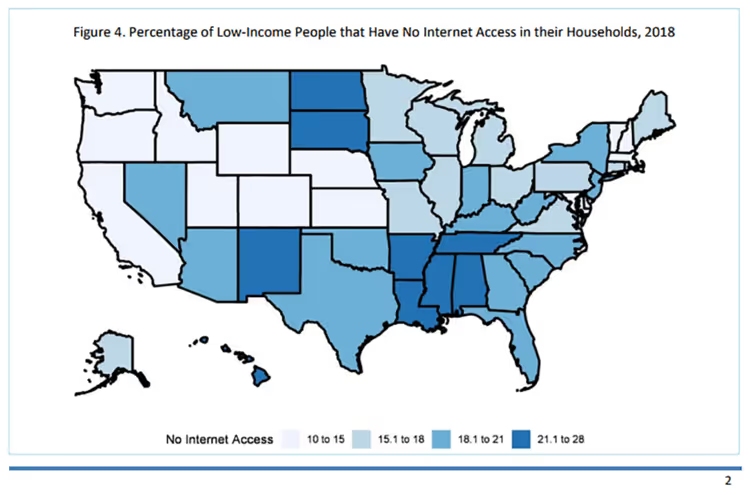
But for other people, there isn’t even the option to enroll in their online account. Certain populations are less likely to view their records electronically. Providers report low percentages of usage in areas of higher poverty and in rural locations. This is due to a lack of internet access. According to the AMA, 25% of people don’t use a patient portal because they don’t have internet access.
Over one in six people in poverty don’t have internet access. Lower-income people in rural areas face even more limitations. Since they don’t have the opportunity to use these online portals, they also become alienated from their providers.
Extra Work for the Provider
With each of the disadvantages of patient portals that I already mentioned comes unintended extra work for the provider. Doctors want their clients to use this service they offer but opt-in rates are still low among patients.
Providers then need to address these issues so that they can boost usage. First, they have to implement cybersecurity protections to keep PHI safe. And they end up having to reassure patients that their data is safe despite their security concerns.
There’s also more work initially with convincing people that patient portals can be useful to them.
Then, they need to spend time teaching these users about the site. Since almost half of people lack health literacy, providers will likely need to spend more time on patient education.
And when patients get concerned over something they see in their health record, it could mean more phone calls or scheduled visits. Even if the information isn’t of concern, not everyone understands that if they don’t have a medical professional explaining the details to them.
But the most work comes for providers in areas with more health disparities. If there are more people without internet access, doctors need to make more of an effort to decrease alienation among those people. It doesn’t benefit anyone if clients can’t even use the tools available to them. Because of this, doctors need to spend more time getting the information to people that would have been available through the portal.
Conclusion
Patient portals are set up to be a benefit for clients. When people opt-in to using these services, they can use quick on-demand features to make their health experience better. For instance, it’s easier to obtain medical records, immunizations, prescription information, and other details.
But even with the ease of these sites, a majority of people don’t use them. Disadvantages of patient portals result in these lower rates of use. For some people, they avoid using the portals altogether for reasons like security issues, low health literacy, or lack of internet.
Even for those who do access their accounts, there are still other disadvantages of patient portals. If they can’t figure out how to use them or become worried over the health information that they view, they could get frustrated with the service.
And with how hard it is to get patients to opt-in and use them without issues, providers are stuck doing more work.
Emphasize your product's unique features or benefits to differentiate it from competitors
In nec dictum adipiscing pharetra enim etiam scelerisque dolor purus ipsum egestas cursus vulputate arcu egestas ut eu sed mollis consectetur mattis pharetra curabitur et maecenas in mattis fames consectetur ipsum quis risus mauris aliquam ornare nisl purus at ipsum nulla accumsan consectetur vestibulum suspendisse aliquam condimentum scelerisque lacinia pellentesque vestibulum condimentum turpis ligula pharetra dictum sapien facilisis sapien at sagittis et cursus congue.
- Pharetra curabitur et maecenas in mattis fames consectetur ipsum quis risus.
- Justo urna nisi auctor consequat consectetur dolor lectus blandit.
- Eget egestas volutpat lacinia vestibulum vitae mattis hendrerit.
- Ornare elit odio tellus orci bibendum dictum id sem congue enim amet diam.
Incorporate statistics or specific numbers to highlight the effectiveness or popularity of your offering
Convallis pellentesque ullamcorper sapien sed tristique fermentum proin amet quam tincidunt feugiat vitae neque quisque odio ut pellentesque ac mauris eget lectus. Pretium arcu turpis lacus sapien sit at eu sapien duis magna nunc nibh nam non ut nibh ultrices ultrices elementum egestas enim nisl sed cursus pellentesque sit dignissim enim euismod sit et convallis sed pelis viverra quam at nisl sit pharetra enim nisl nec vestibulum posuere in volutpat sed blandit neque risus.
Use time-sensitive language to encourage immediate action, such as "Limited Time Offer
Feugiat vitae neque quisque odio ut pellentesque ac mauris eget lectus. Pretium arcu turpis lacus sapien sit at eu sapien duis magna nunc nibh nam non ut nibh ultrices ultrices elementum egestas enim nisl sed cursus pellentesque sit dignissim enim euismod sit et convallis sed pelis viverra quam at nisl sit pharetra enim nisl nec vestibulum posuere in volutpat sed blandit neque risus.
- Pharetra curabitur et maecenas in mattis fames consectetur ipsum quis risus.
- Justo urna nisi auctor consequat consectetur dolor lectus blandit.
- Eget egestas volutpat lacinia vestibulum vitae mattis hendrerit.
- Ornare elit odio tellus orci bibendum dictum id sem congue enim amet diam.
Address customer pain points directly by showing how your product solves their problems
Feugiat vitae neque quisque odio ut pellentesque ac mauris eget lectus. Pretium arcu turpis lacus sapien sit at eu sapien duis magna nunc nibh nam non ut nibh ultrices ultrices elementum egestas enim nisl sed cursus pellentesque sit dignissim enim euismod sit et convallis sed pelis viverra quam at nisl sit pharetra enim nisl nec vestibulum posuere in volutpat sed blandit neque risus.
Vel etiam vel amet aenean eget in habitasse nunc duis tellus sem turpis risus aliquam ac volutpat tellus eu faucibus ullamcorper.
Tailor titles to your ideal customer segment using phrases like "Designed for Busy Professionals
Sed pretium id nibh id sit felis vitae volutpat volutpat adipiscing at sodales neque lectus mi phasellus commodo at elit suspendisse ornare faucibus lectus purus viverra in nec aliquet commodo et sed sed nisi tempor mi pellentesque arcu viverra pretium duis enim vulputate dignissim etiam ultrices vitae neque urna proin nibh diam turpis augue lacus.