What are Payment Platforms: How They Work and Why They Matter
In today's blog, we are going to discuss what a payment platform is and some of the benefits and challenges you can face.

💳 The Evolution of Patient Payments
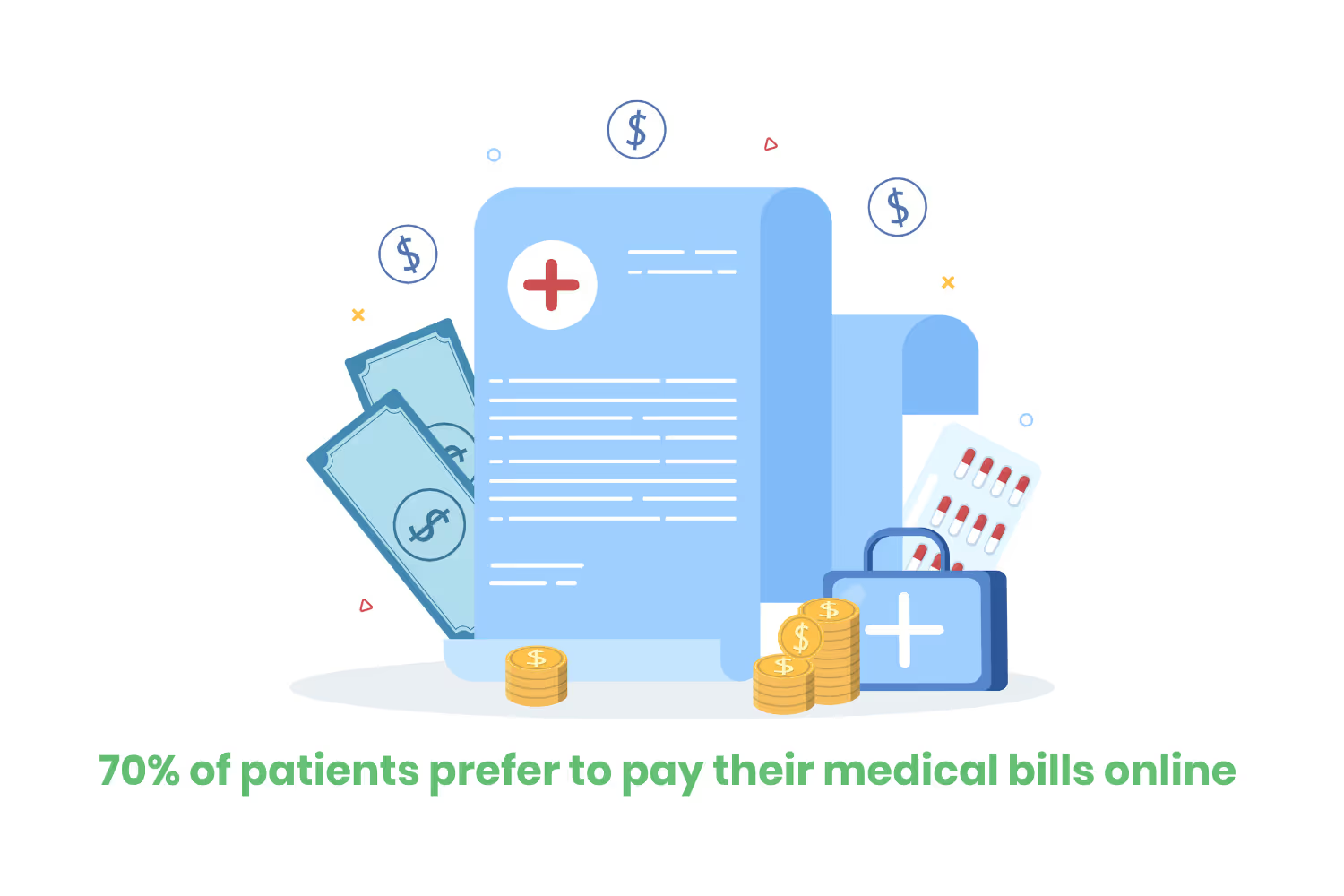
Approximately 70% of patients now prefer paying their medical bills online. Healthcare payment platforms are digital ecosystems that bridge the gap between providers, banks, and patients, offering a secure and convenient alternative to traditional mail-in checks or in-person payments.
Why the Shift Matters
- ✅ Patient Convenience: Allows for 24/7 payments from any location, reducing reliance on office hours.
- ✅ Provider Efficiency: Automated "payment hubs" link transactions directly to invoices, speeding up the Revenue Cycle.
- ✅ Enhanced Security: Utilizes encryption and PCI DSS compliance to safeguard financial data and maintain HIPAA standards.
- ✅ Retention: Studies show that modern payment options can nearly double
Did you know that 70% of patients prefer to pay their medical bills online?
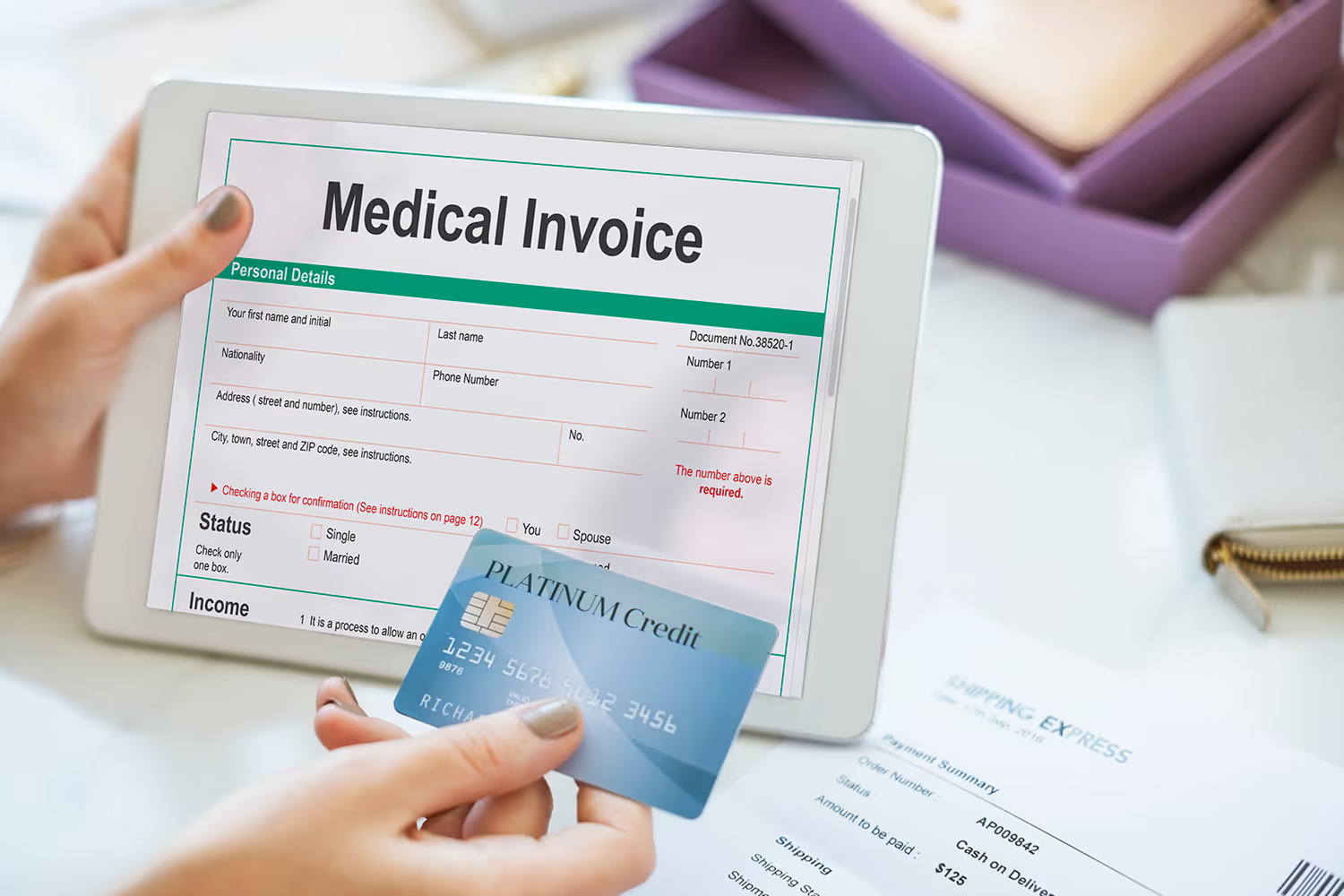
In medical spaces, the use of these payment platforms is becoming more and more common. I'm sure we have all been there, we go to our doctor’s office and they tell you they have this brand new system that allows you to pay online. That is a perfect example of a payment platform in action.
In today's blog, we are going to discuss what a payment platform is and some of the benefits and challenges you can face.
Now without any further ado, let's dive into it!
What are Payment Platforms?
Before we start talking about the benefits and drawbacks of payment platforms, let's take a moment to get a basic understanding of what a payment platform is.
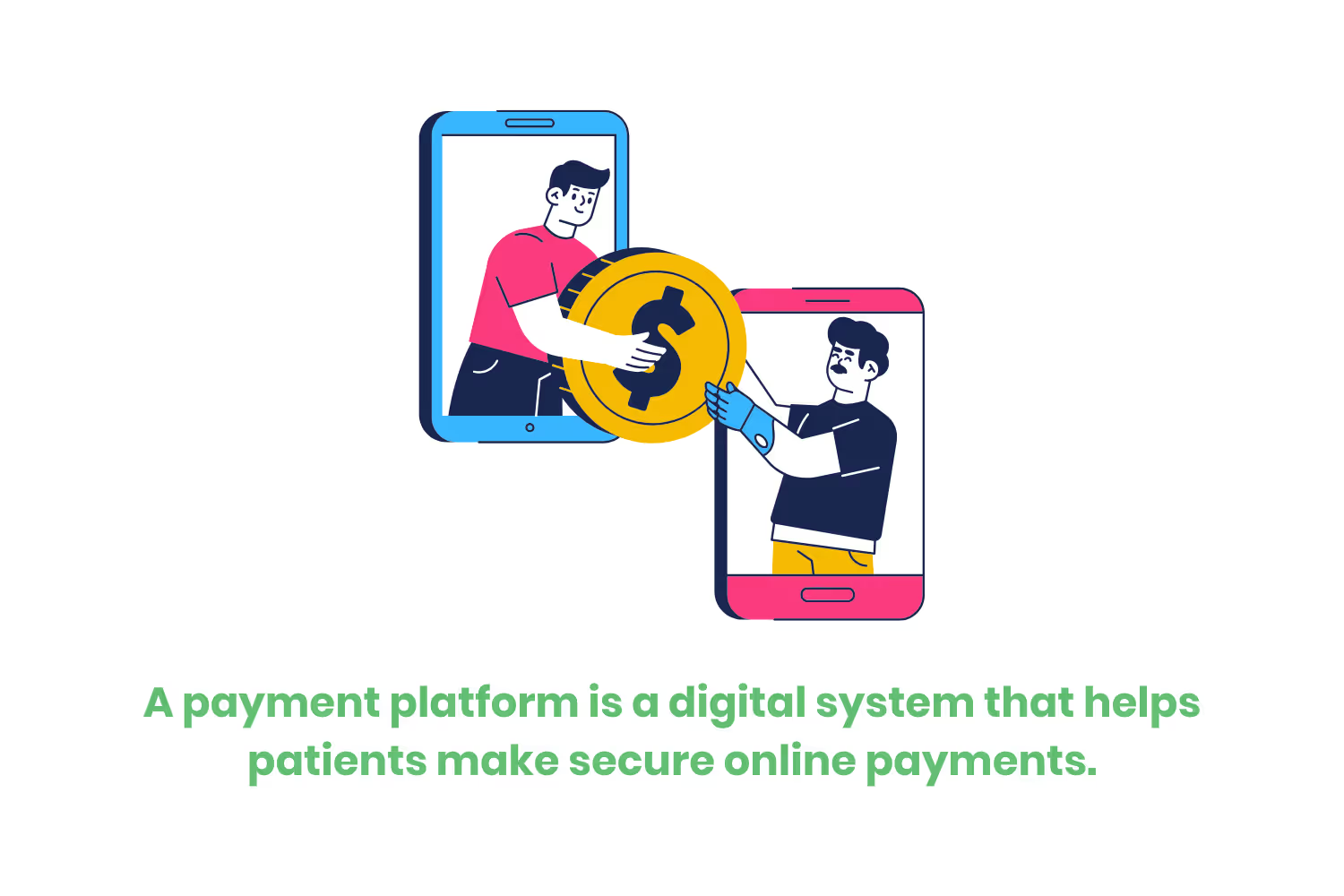
A payment platform is a digital system that helps patients make secure online payments. It connects healthcare providers, banks, and patients to process transactions quickly. Many platforms also include billing automation and payment tracking to help providers manage finances. This system is very convenient for streamlining the payment process for both the patients and the providers.
Before payment platforms, patients had to go to the physician's office or send a check in the mail to make a payment. Now the use of payment platforms allows them the convenience to pay whenever or wherever they want. Which is beneficial for the physician so they get their money faster!
On the provider side, there is something called a payment gateway, which helps when managing payments. In the gateway, the billing department can see all of the patients’ bills, and easily identify who has paid and who hasn't. It is also very easy to follow up with patients who may be late on a bill to ensure payment as soon as possible.
Benefits of Payment Platforms
The use of payment platforms has significantly impacted how businesses deal with receiving payments. These platforms help streamline the payment process, which can be a hassle.
Let’s get into what the exact benefits are of using payment platforms!
Benefit 1: Convenience
We talked a little about how these platforms have increased the convenience of the transaction process for both businesses and patients.
For businesses, payment platforms reduce the need to train employees on billing tasks. This also allows employees to focus on other tasks that they may not normally have time for.
For patients, it allows them to have all the billing information in one place even allowing them to see records. This also means fewer phone calls for your staff about transferring their records to new facilities. Patients also get the convenience of paying when they want, they don't need to be dependent on when the office staff is open to make the payment.
Benefit 2: Speed and Efficiency
Due to the platform being online, this allows for a much quicker transaction time, especially when processing the funds.
With the use of payment hubs, it helps simplify the overall process for medical offices. The payment hub allows for easy billing and insurance processing. The automation of the payment hub allows for the payments to automatically connect to the invoices.
Benefit 3: Security and Compliance
With the world of security becoming more and more advanced, security features like encryption and fraud detection are vital.
Due to medical offices handling confidential patient documentation, it is important to understand the rules and regulations that would apply. The Health Insurance Portability Accountability Act also known as HIPAA is a prime example. HIPAA requires healthcare providers to protect patient health data.
Payment platforms must also follow PCI DSS rules, which keep credit card transactions secure. Providers must use encrypted systems and follow strict security steps to prevent fraud and data breaches. The physician’s office must take the security of patients' information seriously to avoid being uncompliant.

Benefit 4: Global Reach
Telehealth appointments have increased, which means more patients need online payment options. Payment platforms make it easy for patients to pay from anywhere without mailing checks or visiting the office.
With the use of the payment platforms, patients do not need to worry about mailing a check, which would delay payment from the physician's office.
Benefit 5: Improved Customer Experience
With the increased use of payment platforms, customers are more accustomed to seeing, especially in the healthcare industry.
Customers have been very receptive to this change and have been more satisfied with the physician’s office. According to a study, customers are 11% more satisfied and nearly double the likelihood of them staying a patient.
More payment platforms have improved convenience, speed, and the patient experience.
Challenges with Outdated Payment Platforms
Unfortunately, payment platforms are not all great and do have their challenges. It is important to understand these challenges to help prepare for them if you are going to implement a payment plan.
Challenge 1: Security and Fraud Prevention
You may wonder… wasn’t this in the benefits section? How is it both a benefit and a challenge?
Well, I'm glad you asked!
Unfortunately, not everything that is online is automatically secure, even if you have precautions in place. Hackers can still attack payment platforms, even when security measures are in place. Phishing scams trick employees into clicking fake links that expose patient payment data. Healthcare providers must train staff, update security software, and use multi-factor authentication to block these threats.
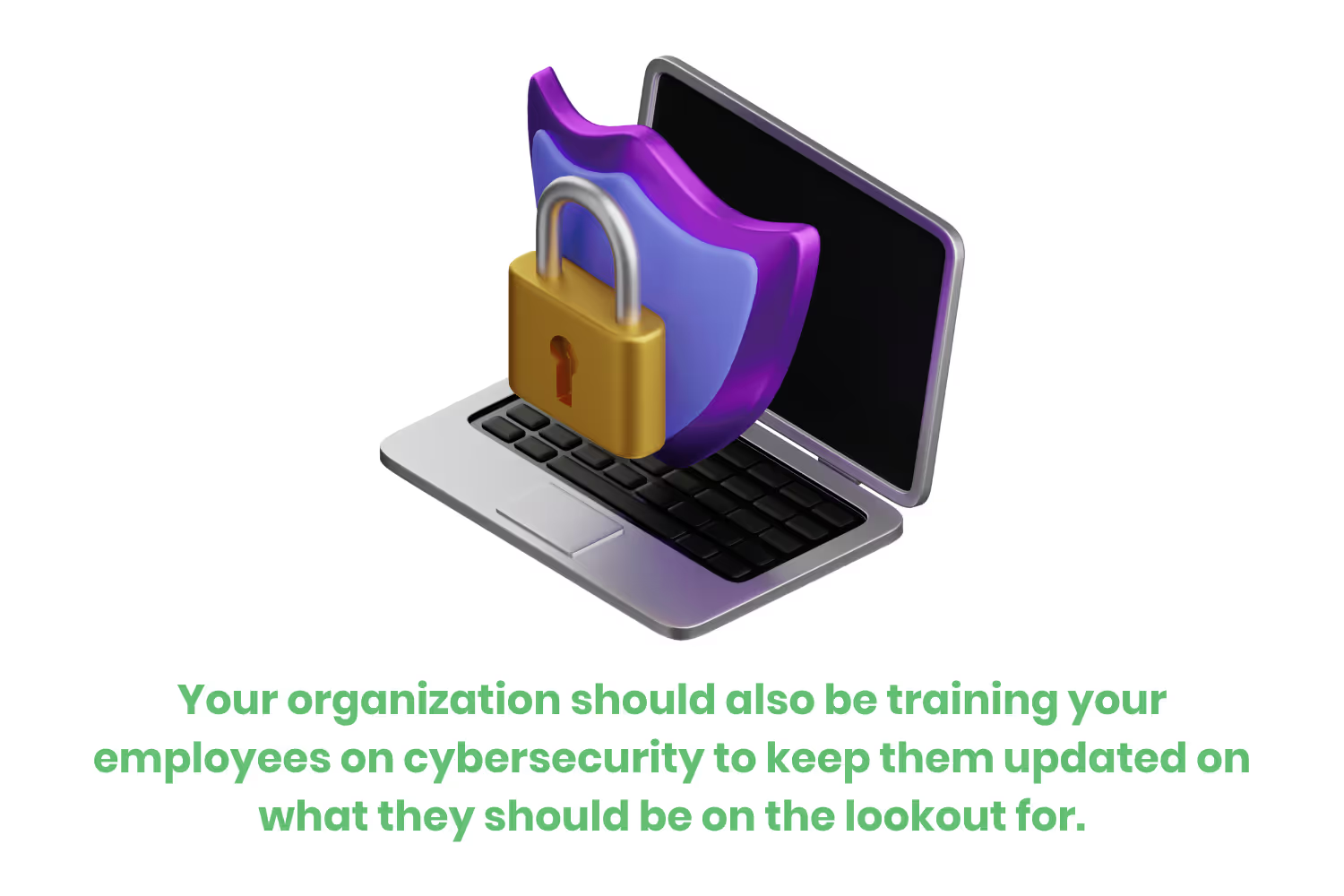
That is why it is so important to constantly update your systems and have someone monitor them at all times. Your organization should also be training your employees on cybersecurity to keep them updated on what they should be on the lookout for. Implementing phishing simulations can help test their knowledge, and let you know who to retrain.
Challenge 2: Complexity and Integration
With any new platform, there is a process of integrating it into the platforms the organization is currently using.
Some employees may be skeptical of the platform and may shy away from it at first. This same scenario can happen with patients especially if they are older clients.
Implementing a good onboarding process can help relieve any concerns the patients or employees may feel.
Challenge 3: Fees and Costs
The use of payment platforms is not free and there are charges that the organization should be aware of. Most payment platforms charge fees, including transaction fees and monthly service costs. Some providers pass these fees to patients, while others absorb them. Before choosing a platform, healthcare offices should compare costs to find the best option.
Before implementing the use of a payment platform it is vital to see if the costs to run the platform are too much. If so the organization can look at other payment platforms that may be at a more affordable price.
Your organization must understand the potential challenges that they may face when adopting payment platforms. It is important to understand how you can prepare for them before they occur.
Conclusion
While the use of payment platforms can increase convenience, the time the transaction takes, and the overall security, they do come with some challenges. From protecting patients’ information to any, and all additional fees or costs you may see, and the complexity of integration.
By understanding all of the benefits and challenges payment platforms come with, physician’s offices can make informed decisions about whether a payment platform is right for them. If they are, understanding and preparing for the challenges can help for some and great experience for everyone involved.
Emphasize your product's unique features or benefits to differentiate it from competitors
In nec dictum adipiscing pharetra enim etiam scelerisque dolor purus ipsum egestas cursus vulputate arcu egestas ut eu sed mollis consectetur mattis pharetra curabitur et maecenas in mattis fames consectetur ipsum quis risus mauris aliquam ornare nisl purus at ipsum nulla accumsan consectetur vestibulum suspendisse aliquam condimentum scelerisque lacinia pellentesque vestibulum condimentum turpis ligula pharetra dictum sapien facilisis sapien at sagittis et cursus congue.
- Pharetra curabitur et maecenas in mattis fames consectetur ipsum quis risus.
- Justo urna nisi auctor consequat consectetur dolor lectus blandit.
- Eget egestas volutpat lacinia vestibulum vitae mattis hendrerit.
- Ornare elit odio tellus orci bibendum dictum id sem congue enim amet diam.
Incorporate statistics or specific numbers to highlight the effectiveness or popularity of your offering
Convallis pellentesque ullamcorper sapien sed tristique fermentum proin amet quam tincidunt feugiat vitae neque quisque odio ut pellentesque ac mauris eget lectus. Pretium arcu turpis lacus sapien sit at eu sapien duis magna nunc nibh nam non ut nibh ultrices ultrices elementum egestas enim nisl sed cursus pellentesque sit dignissim enim euismod sit et convallis sed pelis viverra quam at nisl sit pharetra enim nisl nec vestibulum posuere in volutpat sed blandit neque risus.
Use time-sensitive language to encourage immediate action, such as "Limited Time Offer
Feugiat vitae neque quisque odio ut pellentesque ac mauris eget lectus. Pretium arcu turpis lacus sapien sit at eu sapien duis magna nunc nibh nam non ut nibh ultrices ultrices elementum egestas enim nisl sed cursus pellentesque sit dignissim enim euismod sit et convallis sed pelis viverra quam at nisl sit pharetra enim nisl nec vestibulum posuere in volutpat sed blandit neque risus.
- Pharetra curabitur et maecenas in mattis fames consectetur ipsum quis risus.
- Justo urna nisi auctor consequat consectetur dolor lectus blandit.
- Eget egestas volutpat lacinia vestibulum vitae mattis hendrerit.
- Ornare elit odio tellus orci bibendum dictum id sem congue enim amet diam.
Address customer pain points directly by showing how your product solves their problems
Feugiat vitae neque quisque odio ut pellentesque ac mauris eget lectus. Pretium arcu turpis lacus sapien sit at eu sapien duis magna nunc nibh nam non ut nibh ultrices ultrices elementum egestas enim nisl sed cursus pellentesque sit dignissim enim euismod sit et convallis sed pelis viverra quam at nisl sit pharetra enim nisl nec vestibulum posuere in volutpat sed blandit neque risus.
Vel etiam vel amet aenean eget in habitasse nunc duis tellus sem turpis risus aliquam ac volutpat tellus eu faucibus ullamcorper.
Tailor titles to your ideal customer segment using phrases like "Designed for Busy Professionals
Sed pretium id nibh id sit felis vitae volutpat volutpat adipiscing at sodales neque lectus mi phasellus commodo at elit suspendisse ornare faucibus lectus purus viverra in nec aliquet commodo et sed sed nisi tempor mi pellentesque arcu viverra pretium duis enim vulputate dignissim etiam ultrices vitae neque urna proin nibh diam turpis augue lacus.