The Ultimate Security Awareness Training Policy Template
Human error drives the majority of data breaches, making consistent security awareness training essential. Structured training policies help organizations standardize efforts, reduce risk, and improve overall security behavior.

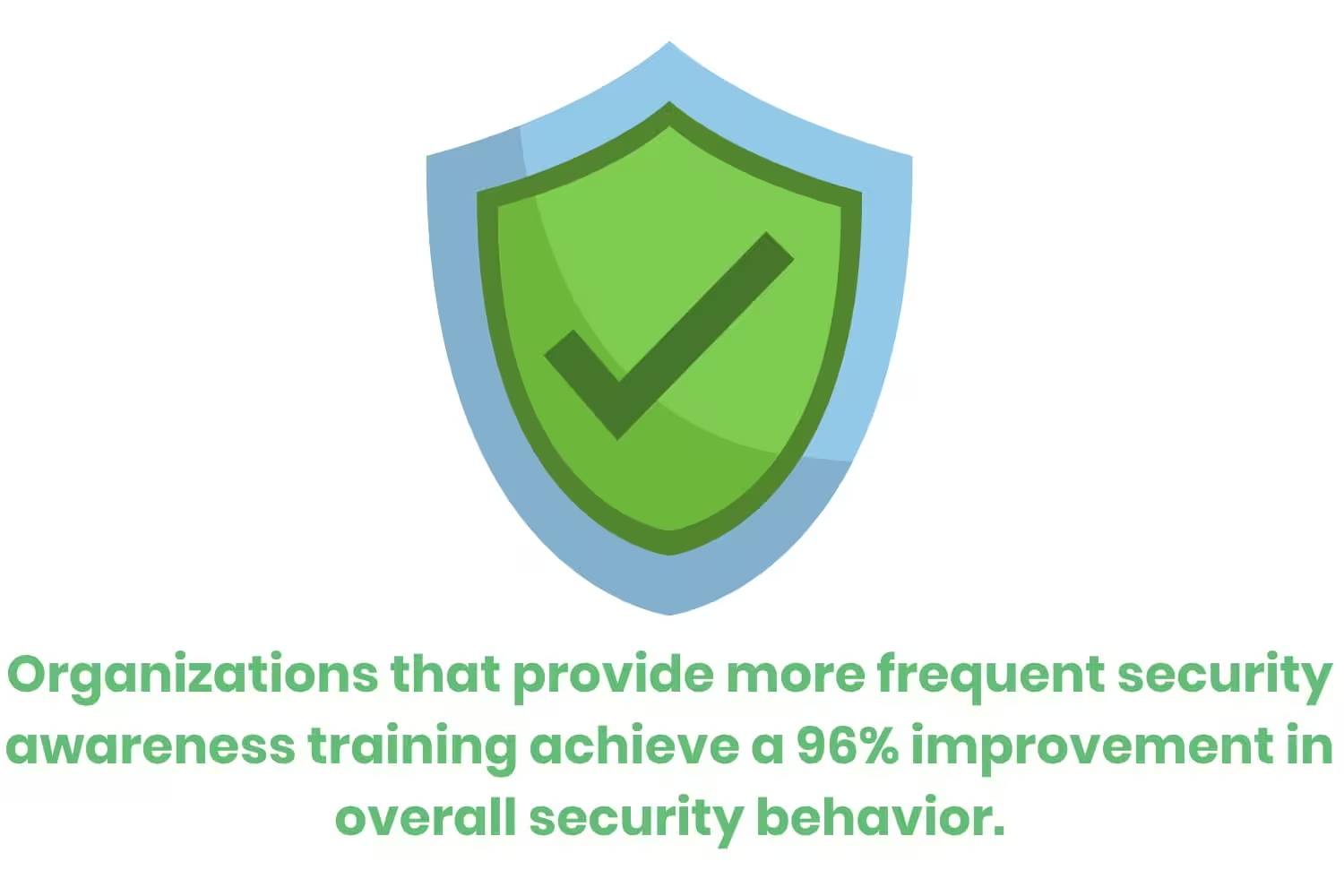
Organizations that provide more frequent security awareness training, combined with weekly phishing simulations, achieve a 96% improvement in overall security behavior. Cyber threats continue to grow in frequency as technology becomes more sophisticated.
These attacks are unfortunately not always easy to spot. Firewalls and monitoring tools play an essential role in keeping data safe. But technology alone cannot offer complete protection. Human error still remains a huge risk to compliance, accounting for 95% of all data breaches. Common mistakes include:
- Clicking malicious links.
- Using weak passwords.
- Mishandling sensitive data.
That's why organizations must focus their efforts on keeping a compliant workplace. Security awareness training is one of the most effective defenses against social engineering. But it is important that you maintain structure throughout your company-wide training.
Without it, efforts can become inconsistent and difficult to measure results. That is where security awareness training policy templates come into play.
What is a Security Awareness Training Policy?
Security awareness and training policies help to provide structure and consistency. That way, every employee is on the same page. This documentation aids in training employees. Specifically, on how to recognize, avoid, and report cyber threats.
Did you know that in the later half of 2024, credential phishing attacks rose by 703%? Regular employee training keeps everyone up to date on cyber threats like these. As well as how to handle secure information.
When talking about security responsibilities, you want to make sure your team understands:
- How to recognize phishing and social engineering attacks.
- How to report a security incident.
- Their role in safeguarding organizational data.

Security Awareness Training Policy Template
Some people elect to create their policy from scratch, but let's be honest... that's a lot of work. Especially when there are so many free templates and training materials online. So how do you know which materials stand up to the test?
Security awareness training policy templates give organizations a repeatable way to reduce risk. As well as strengthen information systems and meet regulatory expectations.
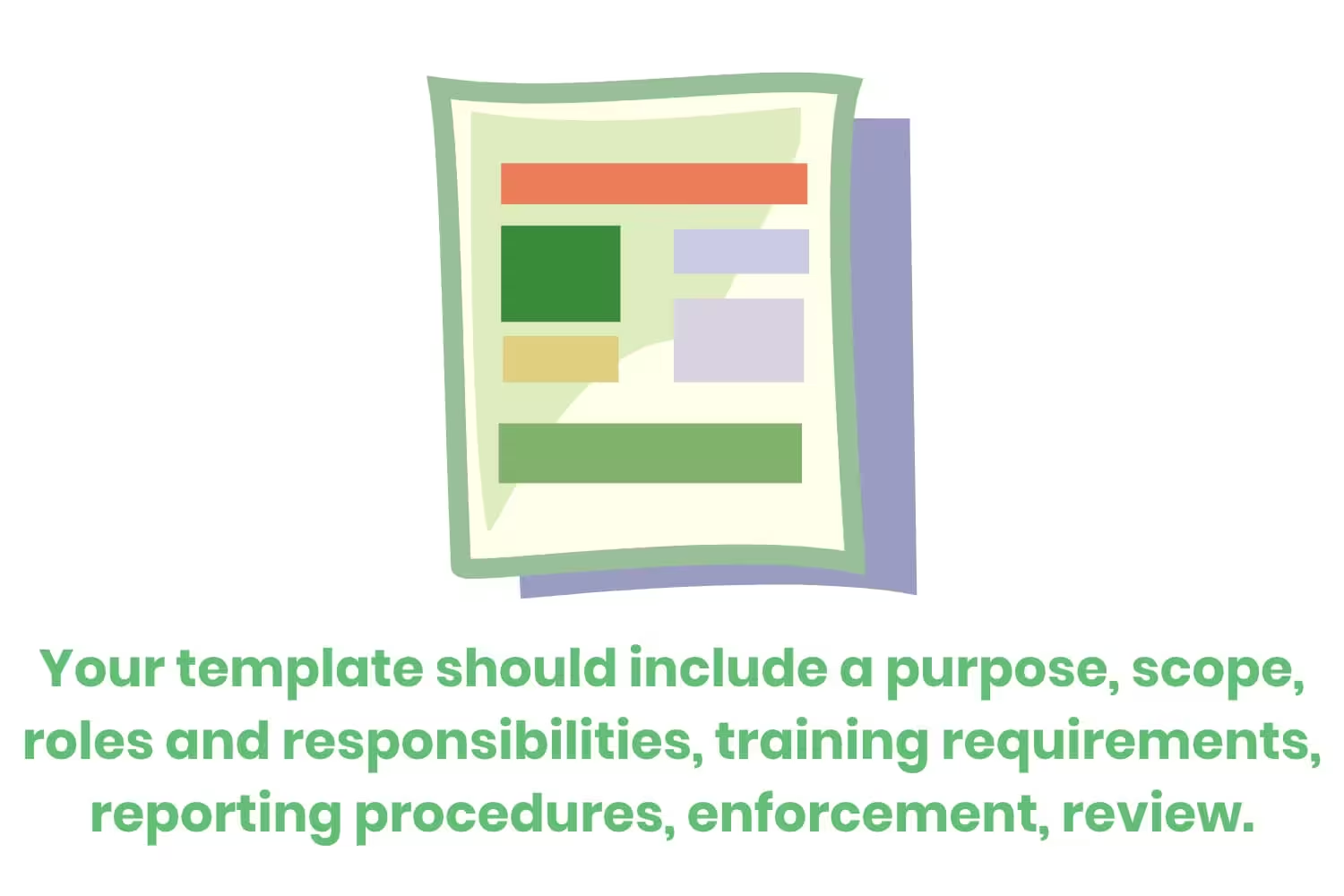
Your policy should have the basics of whatever entity you are trying to stay compliant with. Then you can customize and personalize it. Meeting whatever your specific organizational needs are. Your template should include:
- Purpose
- Scope
- Roles and responsibilities
- Training requirements
- Reporting procedures
- Enforcement
- Review and updates
Following this structure ensures that security and privacy are upheld. Even across the entire organizational structure. You should leave nothing to interpretation. Especially when it comes to implementing a security awareness training policy!
Your Free Security Awareness Training Policy
If you are in need of a free security awareness training policy, you're in luck! We are here to help your team get all their ducks in a row. Building a consistent, defensible, and compliant program is easy with our downloadable template.
This template gives you a starting point for establishing formal training requirements. It also helps strengthen your security culture and reduces risk across your organization. Let's dissect each section together.
Purpose
This is the very first thing you need to include in your awareness and training policy template. The purpose should define the intent to reduce security risks through company-wide education. Through training activities, role-based training, and other information resources. All while meeting regulatory compliance.
Scope
This section identifies who the training applies to. Whether that be employees, contractors, third-party vendors, or temporary staff. Usually anyone who has access to sensitive data or information systems.
Policy Statement
This statement lets everyone in the scope know that the policy applies to them. It emphasizes that all employees must take the training.
Roles and Responsibilities
Everyone in the company has a role to play. This section highlights that. Security procedures might look different depending on an employee's role. Here are a few of the most common:
- Executive Leadership: Supports and enforces the policy.
- IT / Security Team: Develops and maintains training content
- Managers: Ensure staff completion.
- Employees: Participate in training and follow information security policies.
Basic Training Requirements
An effective security awareness training policy should come with basic training requirements. These usually fit in every compliance entity's regulatory requirements. Some examples are:
- New hires must complete their training within 30 days.
- All employees must compete their annual refresher training.
- High-risk roles receive more targeted training.
Training Content
So what exactly should your training address? At the bare minimum, information security awareness training policies should cover:
- Password hygiene.
- Phishing and social engineering.
- Data classification and handling.
- Acceptable use.
- Incident reporting.
- Physical security.

Security Incident Reporting
In the event of a security breach, this tells employees how to respond to an incident. This policy suite requires employees to immediately report information security incidents. Report specifically to the IT or security team to ensure compliance.
Enforcement
Failure to follow data protection and emerging threats is grounds for disciplinary action. This can include anything from having to take training again or even termination. This section will let out your company's tailored plan.
Review and Updates
You should review your policy annually. Or if there are any significant changes to your legal and regulatory requirements.
Does This Template Support Frameworks Like ISO 27001?
Yes. Our template provides a strong foundation for frameworks like ISO 27001. It includes core elements required by ISO. Including defined training requirements, documented responsibilities, and regular policy review.
We suggest organizations customize their template to address any additional regulations. As well as industry standards or contractual obligations specific to their compliance environment. This template offers a great starting point for other major frameworks, including:
- NIST Cybersecurity Framework.
- ISO 27001.
- SOC 1 and SOC 2.
- Site Acceptance Testing (SAT) policies.
- PCI DSS.
- HIPAA.
Measuring Awareness Policy Training Effectiveness
Measuring the effectiveness of your training requires tracking a defined set of metrics. These should show both participation and behavior change. These metrics help organizations understand where you've decreased risk. But also where you might need more training. Some numbers to watch are:
- Training completion rates.
- Phishing simulation click rates.
- Security incident reporting rates.
- Quiz and assessment scores.
All these together paint a clear picture of how effective your policy is. This evidence will help you scale your efforts as security training practices evolve.
Common Compliance Mistakes to Avoid
So you have your template all ready to go. That's great! Make sure to avoid some of these common compliance mistakes. While rolling out your new training policy, keep these in mind. Ignoring even one can void a strong process:
- Failing to enforce recurring training.
- Not documenting training activities.
- Lack of enforcement for non-compliance.
- Not tracking participation or performance.
By avoiding these mistakes, you strengthen your security awareness training program. And support long-term compliance goals.
How to Stay Up-To-Date With Changing Security Standards
You want to maintain a flexible training policy that can evolve with new threats. Regulations often change and best practices are always in flux. You need a fluid policy that is easily adjusted to your compliance environment. Through these changes, always make sure your policy defines:
- Training frequency.
- Mandatory participation.
- Acceptable and prohibited behaviors.
- Consequences for non-compliance.
A strong security awareness training policy template is foundational. It reduces human risk, strengthens information security, and helps companies meet compliance standards. Use our policy template as a starting point. You can customize it to your environment and integrate it into broader standards. By investing in consistent security awareness training, organizations reduce cyber security risk.
Emphasize your product's unique features or benefits to differentiate it from competitors
In nec dictum adipiscing pharetra enim etiam scelerisque dolor purus ipsum egestas cursus vulputate arcu egestas ut eu sed mollis consectetur mattis pharetra curabitur et maecenas in mattis fames consectetur ipsum quis risus mauris aliquam ornare nisl purus at ipsum nulla accumsan consectetur vestibulum suspendisse aliquam condimentum scelerisque lacinia pellentesque vestibulum condimentum turpis ligula pharetra dictum sapien facilisis sapien at sagittis et cursus congue.
- Pharetra curabitur et maecenas in mattis fames consectetur ipsum quis risus.
- Justo urna nisi auctor consequat consectetur dolor lectus blandit.
- Eget egestas volutpat lacinia vestibulum vitae mattis hendrerit.
- Ornare elit odio tellus orci bibendum dictum id sem congue enim amet diam.
Incorporate statistics or specific numbers to highlight the effectiveness or popularity of your offering
Convallis pellentesque ullamcorper sapien sed tristique fermentum proin amet quam tincidunt feugiat vitae neque quisque odio ut pellentesque ac mauris eget lectus. Pretium arcu turpis lacus sapien sit at eu sapien duis magna nunc nibh nam non ut nibh ultrices ultrices elementum egestas enim nisl sed cursus pellentesque sit dignissim enim euismod sit et convallis sed pelis viverra quam at nisl sit pharetra enim nisl nec vestibulum posuere in volutpat sed blandit neque risus.
Use time-sensitive language to encourage immediate action, such as "Limited Time Offer
Feugiat vitae neque quisque odio ut pellentesque ac mauris eget lectus. Pretium arcu turpis lacus sapien sit at eu sapien duis magna nunc nibh nam non ut nibh ultrices ultrices elementum egestas enim nisl sed cursus pellentesque sit dignissim enim euismod sit et convallis sed pelis viverra quam at nisl sit pharetra enim nisl nec vestibulum posuere in volutpat sed blandit neque risus.
- Pharetra curabitur et maecenas in mattis fames consectetur ipsum quis risus.
- Justo urna nisi auctor consequat consectetur dolor lectus blandit.
- Eget egestas volutpat lacinia vestibulum vitae mattis hendrerit.
- Ornare elit odio tellus orci bibendum dictum id sem congue enim amet diam.
Address customer pain points directly by showing how your product solves their problems
Feugiat vitae neque quisque odio ut pellentesque ac mauris eget lectus. Pretium arcu turpis lacus sapien sit at eu sapien duis magna nunc nibh nam non ut nibh ultrices ultrices elementum egestas enim nisl sed cursus pellentesque sit dignissim enim euismod sit et convallis sed pelis viverra quam at nisl sit pharetra enim nisl nec vestibulum posuere in volutpat sed blandit neque risus.
Vel etiam vel amet aenean eget in habitasse nunc duis tellus sem turpis risus aliquam ac volutpat tellus eu faucibus ullamcorper.
Tailor titles to your ideal customer segment using phrases like "Designed for Busy Professionals
Sed pretium id nibh id sit felis vitae volutpat volutpat adipiscing at sodales neque lectus mi phasellus commodo at elit suspendisse ornare faucibus lectus purus viverra in nec aliquet commodo et sed sed nisi tempor mi pellentesque arcu viverra pretium duis enim vulputate dignissim etiam ultrices vitae neque urna proin nibh diam turpis augue lacus.