
Prior Authorization: An Ultimate Guide
In today’s blog, we will be going over everything about prior authorization, and bit about the most common issues with prior authorization.

According to the American Medical Association, 79% of physicians said that prior authorization has led to patients paying the bill out of pocket for medications.
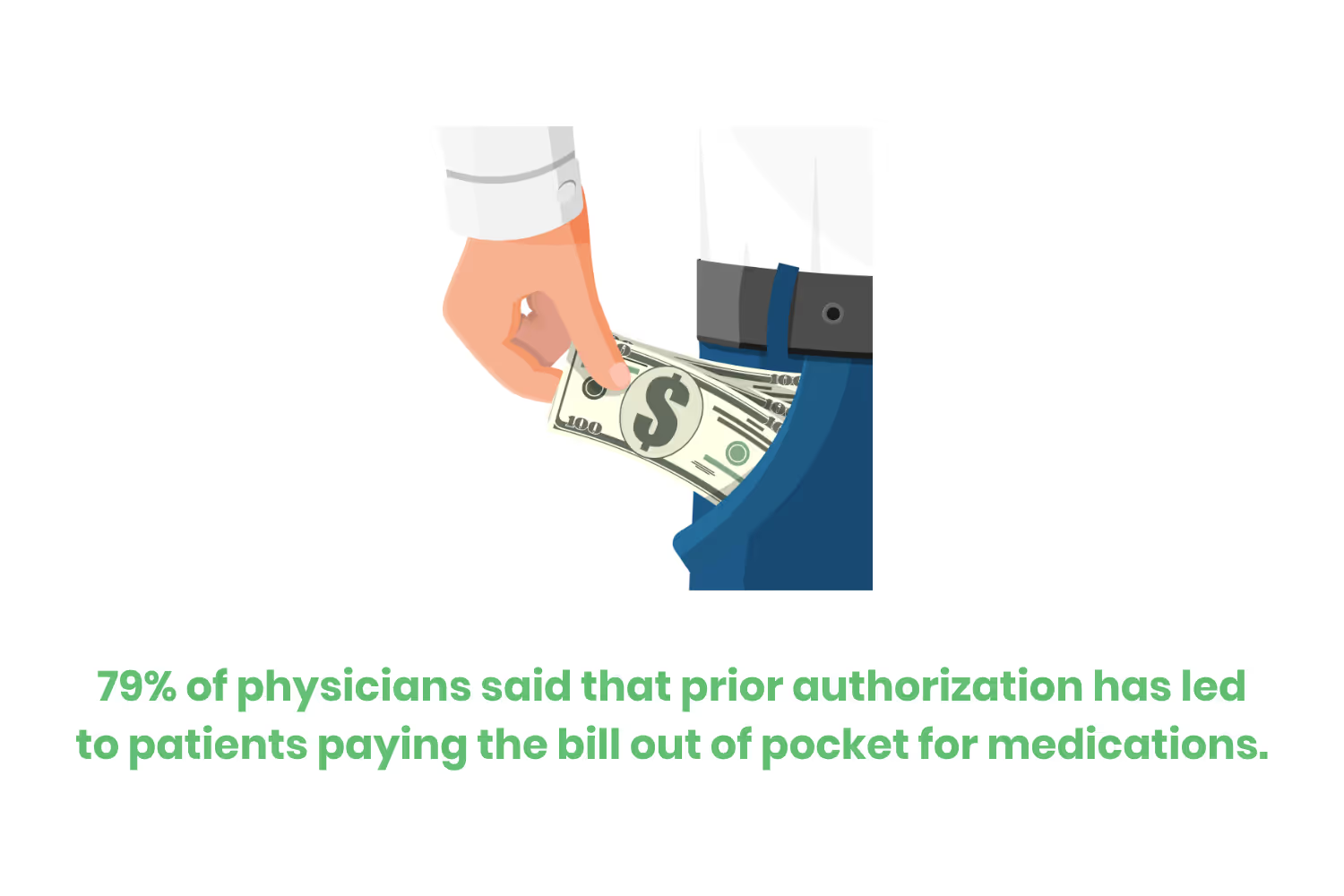
This has led to confusion and frustration for the patient who may not have been expecting this bill. This shows how necessary securing prior authorization is before getting a service provided.
In today’s blog, we will be going over everything about prior authorization, and bit about the most common issues with prior authorization.
What is Prior Authorization?
Before we start, it is important to have a baseline understanding of what prior authorization is.
Prior authorization, also known as PA, is a process that requires the healthcare provider to get approval for a service by the insurance company. This approval needs to occur before the service.
By getting prior authorization before the service can ensure that the patient is not stuck with the entirety of the bill, causing delays.
In most cases prior authorization needs to happen when the services are outside of the general realm. This is to ensure that the Insurance company is not paying for extravagant services that are not medically necessary.
Services That Require Prior Authorization
Non-Emergent Surgeries
There are surgical procedures that are not medically necessary, to ensure the health and safety of the patient. In most cases, you can think of any cosmetic surgeries since they are non-emergent.
Diagnostic Imaging
If a patient requires diagnostic imaging, in the cases of MRI’s or CT scan’s, they do require prior authorization. This is because the insurance providers want to ensure that these scans are medically necessary. In some cases they will request documentation from the physician to provide evidence that the scans are necessary.
Unfortunately, if a patient needs to have radiation therapy or genetic therapy, they will need to get prior authorization. This is because the Insurance provider may view these types of therapies as experimental or unnecessary and ensure they are necessary.
It is important to note that some insurance companies will cover the services listed above. It is vital that your office staff is aware of the insurance provider’s coverage policy. This can help prevent delays or denials later on, but we will dive into that later on in the blog.
Obtaining prior authorization before the service can help streamline the revenue cycle process.
Steps of Prior Authorization
Step 1 Request to Insurer Sent:
The first step of this process is when the physician decides the patient needs a service that requires prior authorization. The physician will document what has happened throughout the appointment, and send the request of prior authorization to the insurance company. It is important to note that the physician's office will provide information on why the service is necessary for the client. This helps show exactly why the service needs to happen, to help get the prior authorization approved.
Step 2 Insurance Provider Reviews the Request
Once the insurance provider receives the prior authorization request, the provider will start to look at the request and the patient's history. In some cases the insurance provider may reach out to the physician's office for any additional information to help them make the decision.
Step 3 The Insurance provider makes a decision
After the insurance provider reviews all of the information, they will finalize their decision on if they will authorize the service.
Step 4 The Healthcare provider gets notified
If the insurance provider approves the service, the physician's office will get informed and they will be able to move forward with the service.
If the insurance provider denies the service, they will inform the physician's office. There are two things that the provider can do, either accept their decision and not have the service provided, or they can appeal the decision.
Prior Authorization Timeframe
There is not a set timeframe of how long the prior authorization process will take. It really depends on how busy the physician office is to determine how long it takes to submit the prior authorization forms.
However, the insurance providers try to have a decision made between 24 to 48 hours of when the request got filed. Unfortunately this can take longer if the insurance provider is busier than usual.
Why is Prior Authorization Important for Patients and Healthcare Proviers
For Patients
With the use of prior authorization, it removes the guessing from if the insurance will cover the service. This allows the patients to know if the service they are about to have will get covered by their insurance provider. Allowing them to either if they still want to have the service and pay the entirety of the bill if the provider doesn't want to cover it.
For Healthcare Providers
With the use of prior authorization, it helps streamline the revenue cycle process. The authorization process helps prevent delays when collecting payment. If a patient is under the impression that the service will receive coverage and once it's performed it turns out that it isn't. That patient will receive a very large bill. The patient would get confused and they would end up calling the physician's office. Ensuring you receive prior authorization, can help allow your office staff to focus on other tasks.
Prior authorization helps ensure there is a clear line of communication between all of the parties involved. Allowing the patient and healthcare provider to make the best decision possible with the knowledge of the services approval.

Common Issues with Prior Authorization
Issue 1: Delays in Patient Care
According to 94% of physicians they state that prior authorization has delayed essential care. Unfortunately some patients require specific treatments or diagnostic tools,they are stuck waiting for approval, lengthening their treatment process. In some cases the delay of patient care can lead to a worse patient outcome, since they did not get the care needed.

Issue 2: Errors in the Authorization Process
Since the documentation that’s put together is performed by a human, there can be some human error in the documents. This can be a miss-spelled name, wrong birthday, or even the wrong insurance information. This can cause a lot of miscommunication between both the physician's office and the insurance provider.
Issue 3: Lack of Transparency
Depending on the Insurance provider if the authorization gets denied, the physician office may not know why. If they’re told, it may not be enough information for them to truly understand why it got denied, causing irritation from both parties.
Understanding these common issues that occur when filing for prior authorization is vital to helping streamline this process.
Conclusion
Prior authorization helps ensure that healthcare services that are medically necessary get approved. It helps prevent the patient from getting left with an unexpectedly large bill, which could cause the physician's office to receive a delay payment.
Getting prior authorization is not as easy as it sounds, there are a lot of common challenges physicians encounter. Whether it is a delay in payment care, errors in the authorization process, or lack of transparency. Which can cause a large amount of frustration for both the physician and the patient.
Your office staff must understand these challenges to help manage the prior authorization process. Having clear communication and detailed documentation can help minimize any of these common challenges.
Emphasize your product's unique features or benefits to differentiate it from competitors
In nec dictum adipiscing pharetra enim etiam scelerisque dolor purus ipsum egestas cursus vulputate arcu egestas ut eu sed mollis consectetur mattis pharetra curabitur et maecenas in mattis fames consectetur ipsum quis risus mauris aliquam ornare nisl purus at ipsum nulla accumsan consectetur vestibulum suspendisse aliquam condimentum scelerisque lacinia pellentesque vestibulum condimentum turpis ligula pharetra dictum sapien facilisis sapien at sagittis et cursus congue.
- Pharetra curabitur et maecenas in mattis fames consectetur ipsum quis risus.
- Justo urna nisi auctor consequat consectetur dolor lectus blandit.
- Eget egestas volutpat lacinia vestibulum vitae mattis hendrerit.
- Ornare elit odio tellus orci bibendum dictum id sem congue enim amet diam.
Incorporate statistics or specific numbers to highlight the effectiveness or popularity of your offering
Convallis pellentesque ullamcorper sapien sed tristique fermentum proin amet quam tincidunt feugiat vitae neque quisque odio ut pellentesque ac mauris eget lectus. Pretium arcu turpis lacus sapien sit at eu sapien duis magna nunc nibh nam non ut nibh ultrices ultrices elementum egestas enim nisl sed cursus pellentesque sit dignissim enim euismod sit et convallis sed pelis viverra quam at nisl sit pharetra enim nisl nec vestibulum posuere in volutpat sed blandit neque risus.
Use time-sensitive language to encourage immediate action, such as "Limited Time Offer
Feugiat vitae neque quisque odio ut pellentesque ac mauris eget lectus. Pretium arcu turpis lacus sapien sit at eu sapien duis magna nunc nibh nam non ut nibh ultrices ultrices elementum egestas enim nisl sed cursus pellentesque sit dignissim enim euismod sit et convallis sed pelis viverra quam at nisl sit pharetra enim nisl nec vestibulum posuere in volutpat sed blandit neque risus.
- Pharetra curabitur et maecenas in mattis fames consectetur ipsum quis risus.
- Justo urna nisi auctor consequat consectetur dolor lectus blandit.
- Eget egestas volutpat lacinia vestibulum vitae mattis hendrerit.
- Ornare elit odio tellus orci bibendum dictum id sem congue enim amet diam.
Address customer pain points directly by showing how your product solves their problems
Feugiat vitae neque quisque odio ut pellentesque ac mauris eget lectus. Pretium arcu turpis lacus sapien sit at eu sapien duis magna nunc nibh nam non ut nibh ultrices ultrices elementum egestas enim nisl sed cursus pellentesque sit dignissim enim euismod sit et convallis sed pelis viverra quam at nisl sit pharetra enim nisl nec vestibulum posuere in volutpat sed blandit neque risus.
Vel etiam vel amet aenean eget in habitasse nunc duis tellus sem turpis risus aliquam ac volutpat tellus eu faucibus ullamcorper.
Tailor titles to your ideal customer segment using phrases like "Designed for Busy Professionals
Sed pretium id nibh id sit felis vitae volutpat volutpat adipiscing at sodales neque lectus mi phasellus commodo at elit suspendisse ornare faucibus lectus purus viverra in nec aliquet commodo et sed sed nisi tempor mi pellentesque arcu viverra pretium duis enim vulputate dignissim etiam ultrices vitae neque urna proin nibh diam turpis augue lacus.