
Payer Enrollment: An Ultimate Guide
Nearly half of healthcare organizations lose revenue due to slow payer enrollment. This guide breaks down the process, common challenges, and how to streamline enrollment for faster reimbursement.
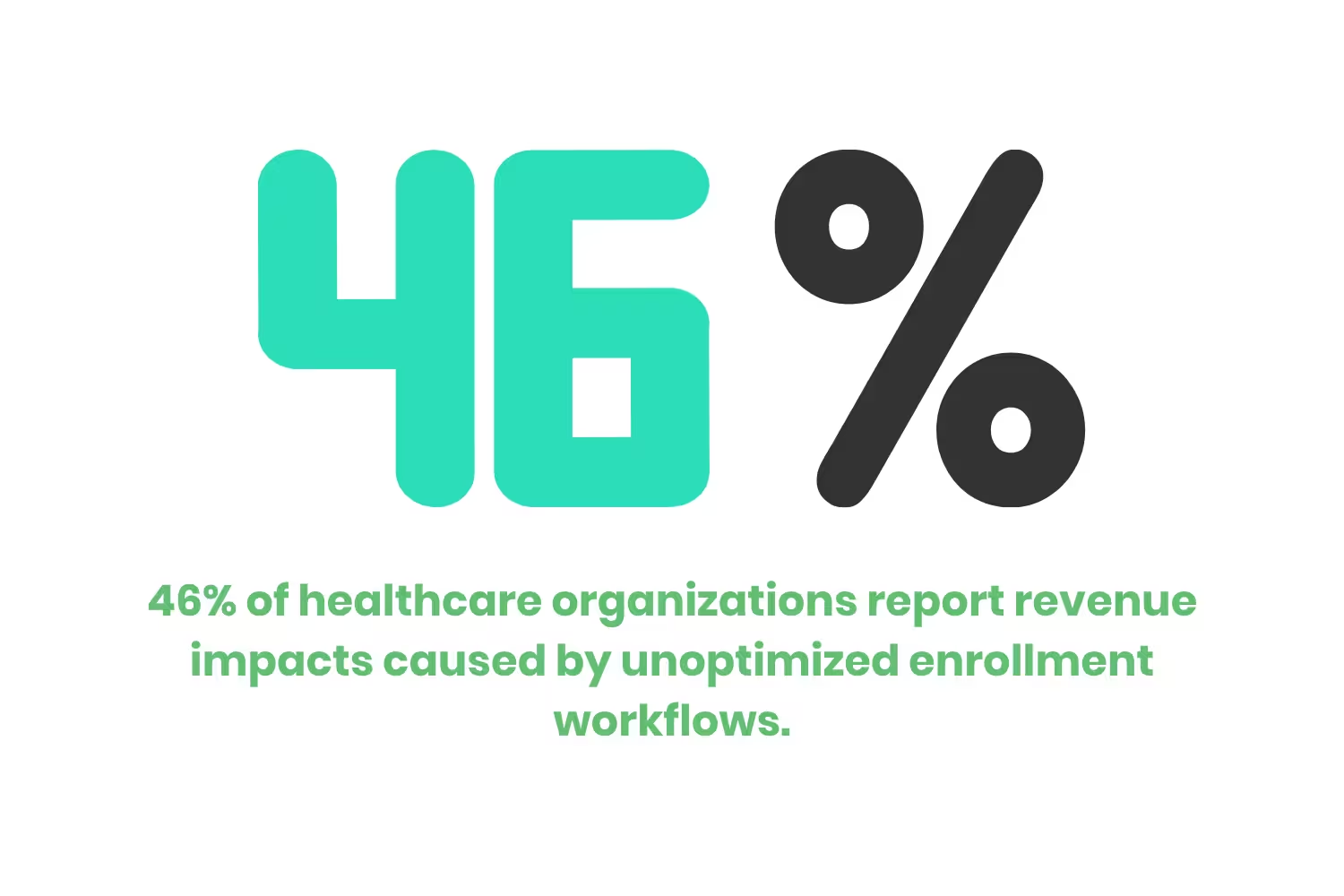
About half of healthcare organizations are losing revenue due to inefficient and slow enrollment processes. That's right, 46% of respondents report revenue impacts caused by unoptimized enrollment workflows.
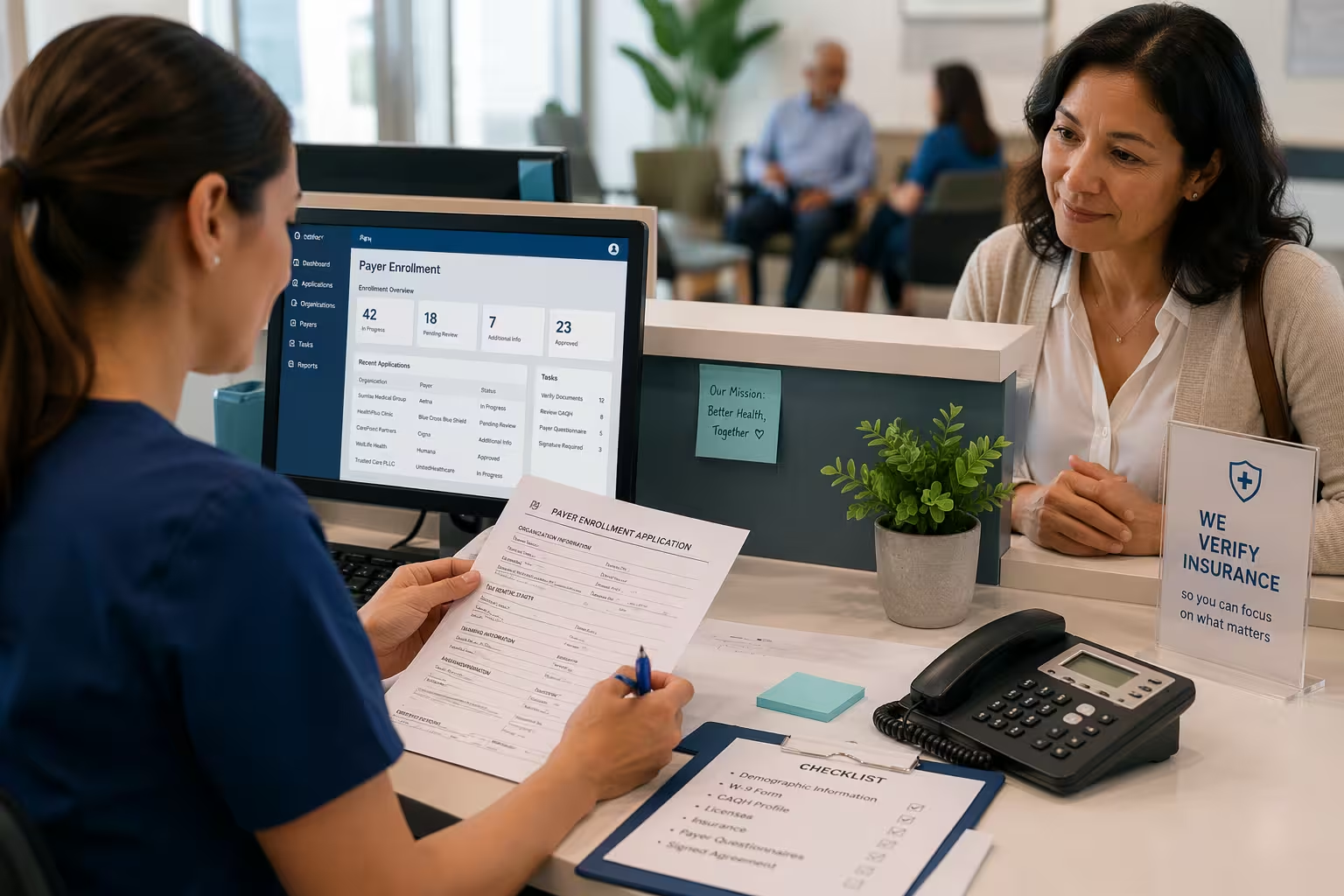
If you work in the industry, you know all too well the struggles that come with payer enrollment. Before a provider can even think about billing insurance, they must first enroll with a payer. If there is a delay, incomplete information, or unclear communication, it can lead to revenue leakage. Often taking the form of missed payments or denied claims.
Many organizations struggle to keep up. Different payers have different rules, timelines, and systems. This makes an already complicated process even harder to manage and track. Without clear visibility, small issues can turn into bigger problems. Problems that affect cash flow.
This guide to payer enrollment breaks down what it is, how it works, and where things often go wrong. It also explores how tools can help reduce delays and improve financial outcomes. So if you've been struggling with your process, this blog is for you!
The Basics of Payer Enrollment
So what exactly is payer enrollment?
This term summarizes the process healthcare providers go through to bill insurance companies. The more efficient this process is, the faster medical providers receive payment for services rendered. Without a proper enrollment plan, businesses miss out on revenue. Even if you deliver fantastic patient care and have perfectly scrubbed claims.
Payer enrollment is the process that connects new providers to a payer. Such as an insurance company, Medicare, or Medicaid. Then they can join their provider network and submit claims under an insurance plan. This is essential for all healthcare organizations and providers. It's the first step to take part in healthcare programs and get paid for care services.
Payer enrollment is a critical part of the revenue cycle. If you delay enrollment or it is incomplete, it can lead to denied claims. Also, missed reimbursement and disruptions in healthcare operations.
Payer Enrollment vs Credentialing: What’s the Difference?
Some people might confuse payer enrollment vs credentialing.
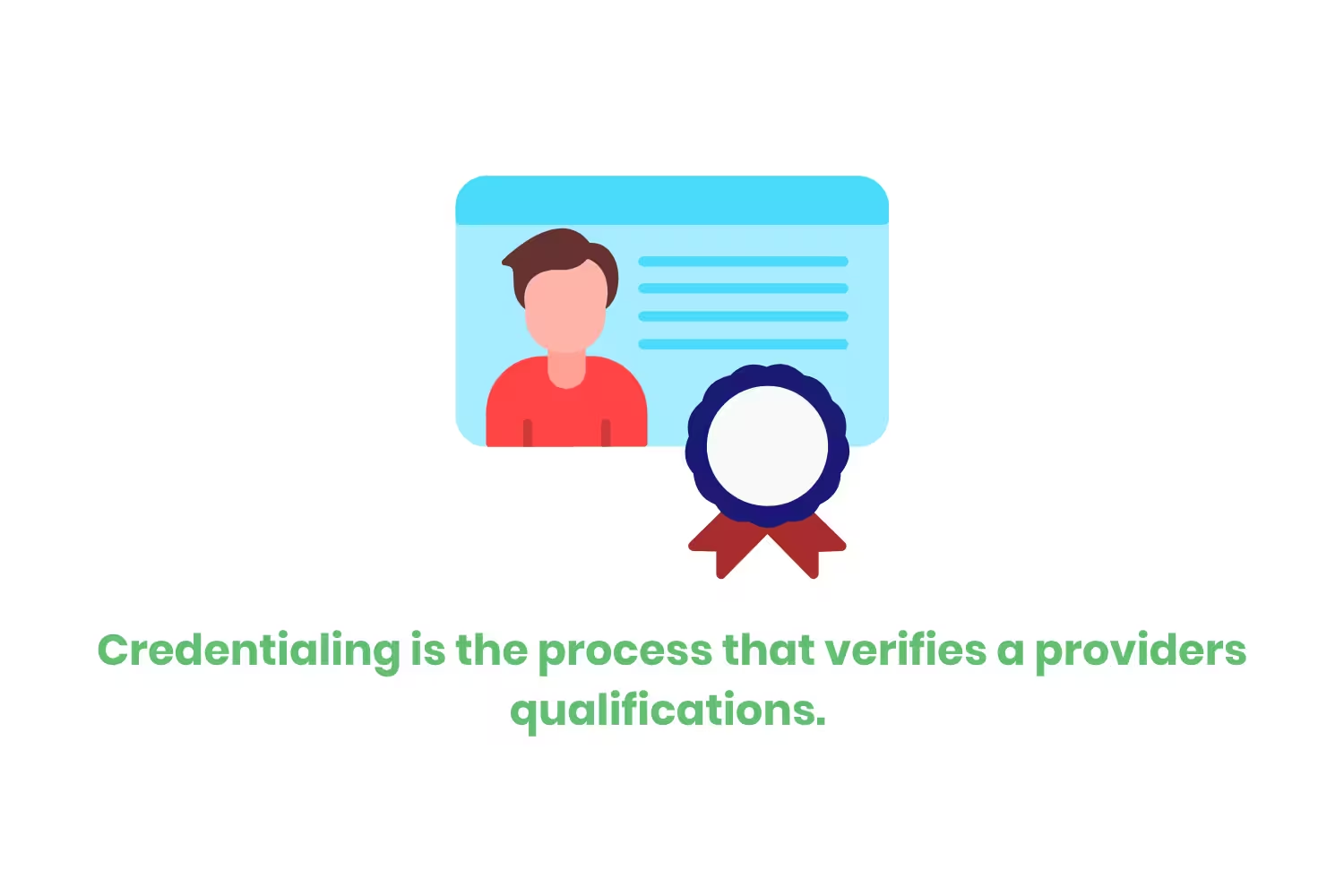
It's important to remember that they are not the same. Credentialing is the process that verifies a providers qualifications. This ensures they meet industry standards. The credentialing process checks information such as education, certification, training, and work history. This ensures healthcare professionals meet payer requirements to treat patients safely.
Payer enrollment registers a provider with insurance companies so they can receive payment. The difference between payer enrollment and credentialing comes down to this:
- Provider credentialing focuses on verification.
- Payer enrollment allows the provider to get paid.
While they are different, both steps are necessary. To enroll, a provider needs to go through the provider credentialing process. Enrollment ensures they are quickly reimbursed for services.
Inside the Payer Enrollment Process
The payer enrollment process may seem intimidating at first. But it's pretty straight forward at the end of the day. The only hang up is that inputting information may be a bit time consuming, depending on what system you use. As well as the complexities brought about due to each payer having different rules. We will get to that in a bit.
The process goes over the steps needed to connect a provider with an insurance company. This includes collecting provider information and submitting an enrollment application. As well as working with payer enrollment departments to gain approval.
Like I mentioned before, this process for healthcare providers can be complex. Each payer may have different rules, forms, and timelines. Healthcare organizations must manage enrollment tasks across multiple payers. Which inherently can slow things down.
Ensuring your process runs smoothly here is key. Payer enrollment is one of the first steps in the revenue cycle. So any mistakes during this time can affect everything that follows. Including billing and reimbursement. We see it all of the time, one false input of information causes a bottleneck later down the line. So what exactly makes up the credentialing and payer enrollment process?
Step-by-Step Payer Enrollment Process
The enrollment process for healthcare locations can change depending on where you work. It includes first submitting an enrollment application to the payer. Complete with detailed provider data. Provider data in this case might include licensing, certification, and other qualification details. You may also need to fill out a credentialing form.
After submitting all necessary documentation, the ball is now in the payers' court. It is at this point that they verify the provider’s background. Ensuring compliance with payer requirements. If any enrollment issues arise here, you will need to respond quickly. Not being aware of your enrollment's status can cause unnecessary delays in your timeline.
Once approved, the provider gets added to the payer networks. It is now that they can begin submitting claims. Finally, ERA and EFT setup ensures providers can receive payment.
You must complete each of these enrollment activities to avoid enrollment delays. This helps to ensure providers get reimbursed for services on time.
How Long Does Payer Enrollment Take?
Enrollment can take several weeks. In some cases, even months. On average, enrollment can take anywhere from 60 to 120 days, depending on the payer. This all fluctuates depending on the payer or course, but also on your process. Mainly the completeness of your enrollment application and how quickly any issues get resolved.
There are a few common causes of enrollment delays. These include missing documentation, slow processing of paper forms, and lack of visibility into enrollment status. As well as delays in payer follow-ups. If your business is managing multiple providers, these delays can significantly impact reimbursement.
Common Challenges in Payer Enrollment
Let's further elaborate on what can cause you a delay in your enrollment process. There are many challenges in payer enrollment that affect healthcare practices. First and foremost, lack of visibility into enrollment status. To put it simply, how can you know if you need to fix an error if you aren't aware of it? Without visibility into the status, teams struggle to navigate the process.
Managing provider enrollment across multiple payer networks is also a common difficulty. Especially when each is specific to each payer. Trying to keep track of multiple enrollments can be a pain. Add on having to manually follow up with payers, your administrative workload just doubled.
Speaking of manual, a manual workflow adds more complexity. Tracking enrollment data, making calls, and managing enrollment tasks often leads to errors. Enrollment gaps and other enrollment issues are a direct result of this. Making managing payer enrollment more difficult, ultimately slowing down the ability to receive payment.
Not directly addressing these challenges when setting up your process can mean lower reimbursement rates and disruptions in healthcare operations.
What Are Payer Enrollment Services in Healthcare?
Having payment enrollment services as a part of your healthcare operations is like having a cheat code. They help you manage the process from start to finish. Services tend to handle tasks like:
- Submitting enrollment applications.
- Managing provider enrollment across multiple payers.
- Communicating with insurance companies.
Here at Etactics, we take our services a step further. We offer an inside look at the status of your payer enrollment process. You can see in real time if your application passes or fails. Knowing immediately if you need to step in to make changes or fix errors.
Experienced enrollment services can help healthcare practices navigate the process more efficiently and reduce enrollment issues. They offer tools that streamline the process and improve visibility. Focusing on centralized provider data, automated enrollment activities, and improved payer relationships.
Closing Enrollment Gaps for Faster Reimbursement
Managing payer enrollment alone can be overwhelming. Especially for businesses with a large number of healthcare providers to enroll. Luckily, Etactics simplifies the process for you. We offer a more complete and transparent approach through our credentialing and enrollment tools.
We offer our clients insights on their enrollment status with real-time updates. This removes the guesswork and the back-and-forth with payers. We also take the brunt of payer communication on behalf of clients, working directly with payer enrollment departments. We call for you to resolve enrollment issues and expedite the process, saving you time and resources.
Taking it a step even further, Etactics does not consider payer enrollment finished until ERA is fully set up. Only when providers can receive payment do we consider an enrollment complete.
Payer enrollment is one of the most important steps in the revenue cycle. Yet it is often one of the most challenging to manage. Without proper enrollment, healthcare providers cannot receive payment. These delays can impact the entire organization and negatively affect not only your business, but patient care.
By utilizing payer enrollment services, your organization can streamline the process and improve financial outcomes. With the right support, organizations can navigate the process more effectively. Reducing delays and ensuring providers receive reimbursement for the services they offer.
Emphasize your product's unique features or benefits to differentiate it from competitors
In nec dictum adipiscing pharetra enim etiam scelerisque dolor purus ipsum egestas cursus vulputate arcu egestas ut eu sed mollis consectetur mattis pharetra curabitur et maecenas in mattis fames consectetur ipsum quis risus mauris aliquam ornare nisl purus at ipsum nulla accumsan consectetur vestibulum suspendisse aliquam condimentum scelerisque lacinia pellentesque vestibulum condimentum turpis ligula pharetra dictum sapien facilisis sapien at sagittis et cursus congue.
- Pharetra curabitur et maecenas in mattis fames consectetur ipsum quis risus.
- Justo urna nisi auctor consequat consectetur dolor lectus blandit.
- Eget egestas volutpat lacinia vestibulum vitae mattis hendrerit.
- Ornare elit odio tellus orci bibendum dictum id sem congue enim amet diam.
Incorporate statistics or specific numbers to highlight the effectiveness or popularity of your offering
Convallis pellentesque ullamcorper sapien sed tristique fermentum proin amet quam tincidunt feugiat vitae neque quisque odio ut pellentesque ac mauris eget lectus. Pretium arcu turpis lacus sapien sit at eu sapien duis magna nunc nibh nam non ut nibh ultrices ultrices elementum egestas enim nisl sed cursus pellentesque sit dignissim enim euismod sit et convallis sed pelis viverra quam at nisl sit pharetra enim nisl nec vestibulum posuere in volutpat sed blandit neque risus.
Use time-sensitive language to encourage immediate action, such as "Limited Time Offer
Feugiat vitae neque quisque odio ut pellentesque ac mauris eget lectus. Pretium arcu turpis lacus sapien sit at eu sapien duis magna nunc nibh nam non ut nibh ultrices ultrices elementum egestas enim nisl sed cursus pellentesque sit dignissim enim euismod sit et convallis sed pelis viverra quam at nisl sit pharetra enim nisl nec vestibulum posuere in volutpat sed blandit neque risus.
- Pharetra curabitur et maecenas in mattis fames consectetur ipsum quis risus.
- Justo urna nisi auctor consequat consectetur dolor lectus blandit.
- Eget egestas volutpat lacinia vestibulum vitae mattis hendrerit.
- Ornare elit odio tellus orci bibendum dictum id sem congue enim amet diam.
Address customer pain points directly by showing how your product solves their problems
Feugiat vitae neque quisque odio ut pellentesque ac mauris eget lectus. Pretium arcu turpis lacus sapien sit at eu sapien duis magna nunc nibh nam non ut nibh ultrices ultrices elementum egestas enim nisl sed cursus pellentesque sit dignissim enim euismod sit et convallis sed pelis viverra quam at nisl sit pharetra enim nisl nec vestibulum posuere in volutpat sed blandit neque risus.
Vel etiam vel amet aenean eget in habitasse nunc duis tellus sem turpis risus aliquam ac volutpat tellus eu faucibus ullamcorper.
Tailor titles to your ideal customer segment using phrases like "Designed for Busy Professionals
Sed pretium id nibh id sit felis vitae volutpat volutpat adipiscing at sodales neque lectus mi phasellus commodo at elit suspendisse ornare faucibus lectus purus viverra in nec aliquet commodo et sed sed nisi tempor mi pellentesque arcu viverra pretium duis enim vulputate dignissim etiam ultrices vitae neque urna proin nibh diam turpis augue lacus.