
5 Simple But Effective Dunning Messages for Patient Statements
What is a dunning message on a statement? That’s a question you’ve asked yourself before, especially when you were first getting into the medical billing space. But it’s an essential piece of every bill. Here are some examples.

What is a dunning message on a statement?
That’s a question you’ve asked yourself before, especially when you were first getting into the medical billing space. But it’s an essential piece of every bill.
Out of all of the different elements that make up a patient-friendly design, the dunning message lands within the top five most important. That’s because it tells the recipient the current status of their account and whether or not their payment is overdue.
In other words, a dunning message is a simple, straightforward way to communicate with your patient about the status of their balance.
From a high-level, there are two things every patient must-do to help keep your healthcare entity alive.
First, they need to show up to their appointments. Patient no-shows mean you wouldn’t have any clients.
Second, they need to pay the statements you send them. Not paying you for your services won’t keep your doors open.
But coming up with an effective dunning message isn’t an easy task. There’s only so much room designated on the page. What’s written there has to be…
- Brief enough so that it’s not a task to read
- Understandable by patients of different backgrounds
- Written in your organization’s tone of voice
- Designed in a way that catches the eye
All four of these factors attribute to an effective message. Achieve this isn’t too difficult if your patients will pay you after the first time they receive their statement.
But the truth is, that doesn’t happen very often.
1 in 5 Americans with insurance struggle to pay their medical bills. Practices and doctor’s offices have to send statements multiple times to patients before they receive payment. However, sending a bill with the same content within it constantly isn’t effective. Neither is manually changing each individual statement isn’t efficient.
That’s where outsourcing statement delivery comes in.
Certain statement providers can dynamically change your message based on the status of the account. If you can do this, your patients will be more receptive to the statements they receive.
Not switching messaging based on account status means that every bill your patients receive contain not only has the same overall design (which isn’t a bad thing) but also the messaging (which is a bad thing).
That’s not to say you shouldn’t resend medical bills to your patients who haven’t paid. But sending the same statement without any adjustments might make your patients think they’re getting a duplicate or double bill from your services.
Here are five simple but effective dunning messages for patient statements.
Example 1 - Detailed First Notice
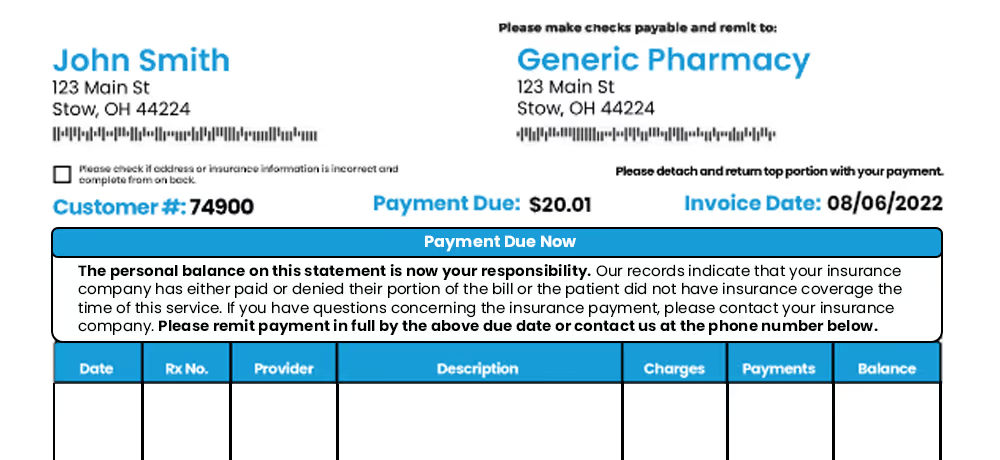
Our first example of an effective patient statement dunning message doesn’t cut any corners.
The industry refer to this example as a “first notice.” It gets added to a statement the first time it’s sent to a patient. The phrasing is professional and as detailed as possible to ensure that the recipient understands that this is what they owe.
It’s a great example for three reasons. First, it states, “The personal balance on this statement is now your responsibility.” Letting the patient know why they’re receiving their bill is important. This is easy to find because the font is in bold, which catches the reader’s eye. Every element present within this example is that of a patient-friendly design.
Second, the copy after the first sentence gives reasoning and an objective. It mentions that insurance helped calculate the total and that they need to send payment to the address below.
Third, the dunning message doesn’t use subjective language. It’s professional and direct throughout in order to reduce confusion.
Receiving a statement in the mail might be a surprise for many patients. That’s why it’s important to be as descriptive as possible upfront.
Example 2 - Simple First Notice
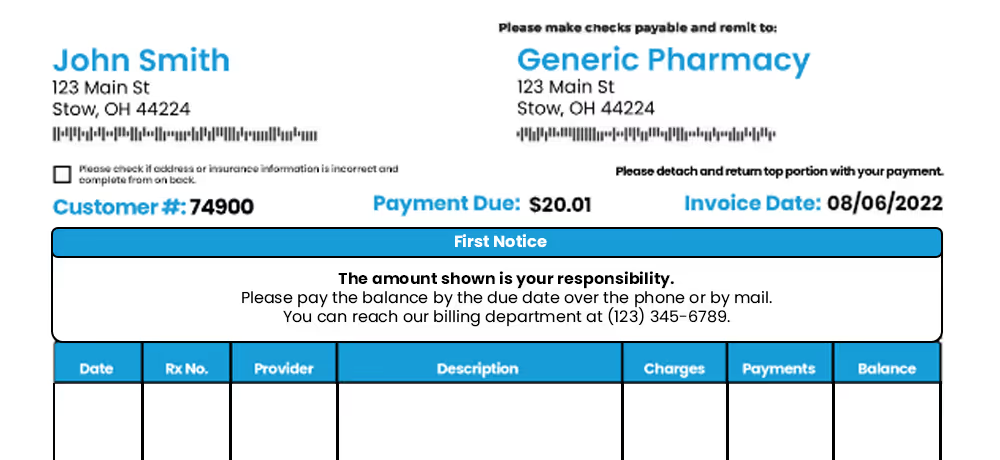
Maybe you don’t want to scare your patients away with so much text on their first notice. Seeing a paragraph at the top of a statement could come off as intimidating to its reader.
If that’s the case, this is the type of first notice for your practice. It’s simple, to the point and instructive enough. Unlike the first example, this dunning message provides the practice’s phone number.
Although it’s a good idea from a customer service standpoint to make yourself available, it encourages your patients to call you more often. This could availability could overburden your employees, especially if you haven’t integrated any AI chatbots into your practice yet.
For this type of first notice, it’s important to understand your patient demographic.
If the majority of the patients you see are Baby Boomers you could substitute the phone number within this example with an email address. After all, 93% of Baby Boomers use email on a daily basis.
Example 3 - Eye-Popping Past Due Notice
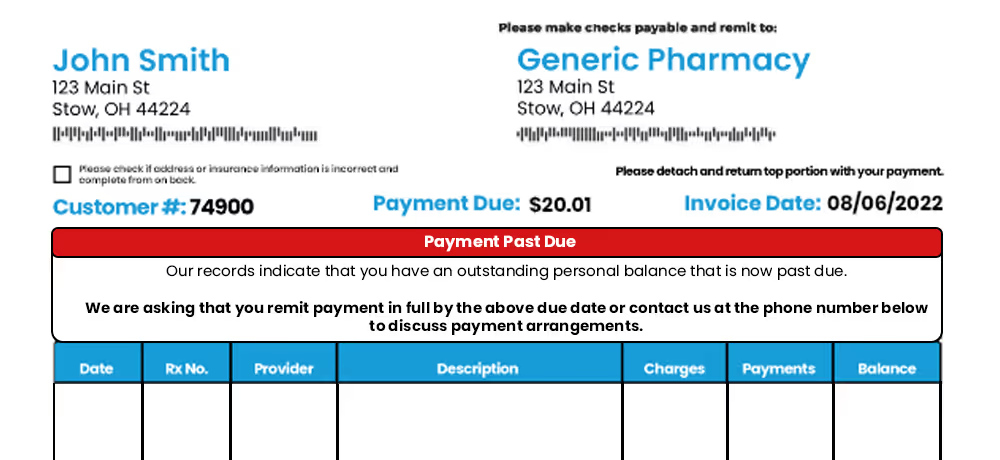
The second example is very different than our first but it’s from the same healthcare organization. As you can see, this statement uses identical design elements, which helps keep everything cohesive. However, the dunning message isn’t the same.
This example is for a patient that’s late on their statement payment. It’s overdue. In other words, it’s a “past due” notice. What’s so great about this past due notice is its use of color and brevity.
Let’s look at the entire statement.
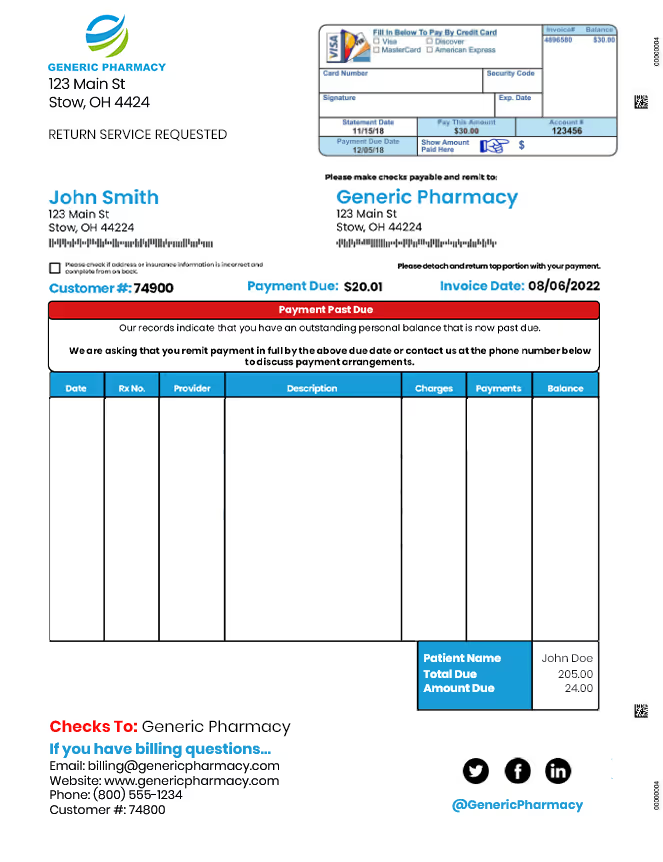
The bar notifying the patient that their payment is overdue stands out on this statement more than any other element on the page.
Additionally, the call to action to contact the practice is bold. There could be thousands of reasons why this patient hasn’t paid their statement off. In this example, the practice realized this so they made that part of the copy standout.
Example 4 - Blunt Third Notice
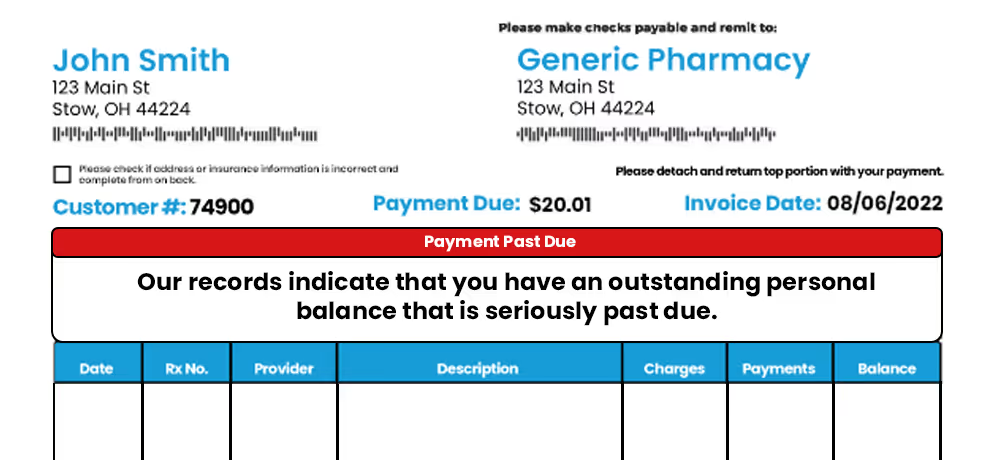
If a patient still hasn’t paid their balance after the second statement, although slight, there’s still a chance. After your team has determined whether or not they have the patient’s right address, the dunning message should change again.
At this point, if they’ve received your previous two statements, they’re more than likely aware that they have an outstanding balance. Maybe the patient put off their payment and forgot. After all, one-quarter of Americans don’t pay their bills on time.
This example is a last-ditch effort to receive payment. The entire goal of this example message is to do nothing more than grab the reader’s attention. It’s stripped of any extra information within it other than letting them know that their balance is overdue.
Getting rid of information naturally adds more room. This third notice example takes advantage of any extra space by increasing the size and boldness of the copy within it.
Example 5 - Final Notice Before Collections
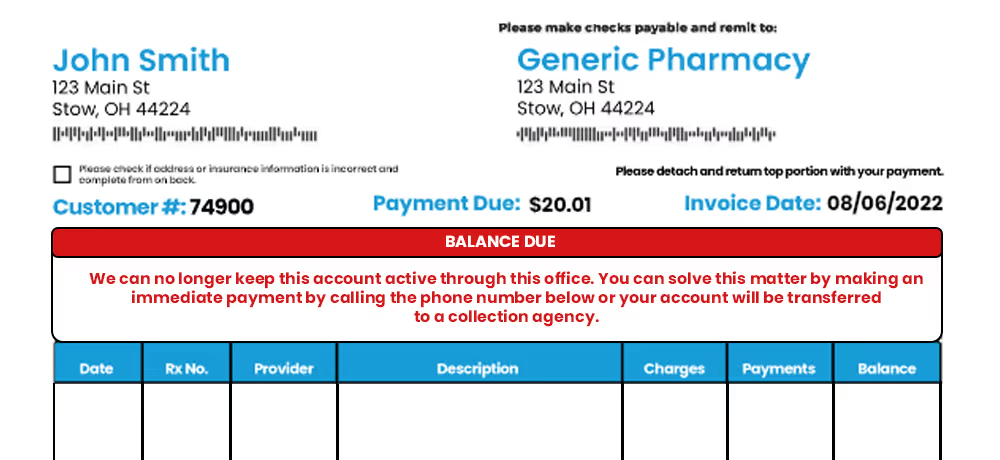
If you’ve sent your overdue patient’s three statements that each contain different dunning messages and they still haven’t paid you, it’s time to move on.
At this point, you’ve racked up a lot of added fees to retrieve these payments. So it’s time to send these accounts to a collection agency.
However, you’ll still need to tell them that their account is no longer active within your office. How can you do this? One final statement.
Maybe by some miracle, they’ll pay it once they recieve this last try. If they don’t, it’s time to send it to collections.
This fourth notice follows a similar format as its predecessor. It’s red and bold. However, the copy within it is a bit more detailed. It lets the patient know that this is their final notice.
Conclusion
Getting patients to pay isn’t an easy task. After all, more than 46 million people have at least one unpaid medical bill that’s ended up at a collection agency.
But by having a dunning message for your patient statements, you’re headed in the direction towards better collection processes. It’s an essential element that helps you communicate with the recipient and avoid confusion.
While coming up with the messaging for your own dunning messages, take a look at the examples within the post to help you brainstorm.
Emphasize your product's unique features or benefits to differentiate it from competitors
In nec dictum adipiscing pharetra enim etiam scelerisque dolor purus ipsum egestas cursus vulputate arcu egestas ut eu sed mollis consectetur mattis pharetra curabitur et maecenas in mattis fames consectetur ipsum quis risus mauris aliquam ornare nisl purus at ipsum nulla accumsan consectetur vestibulum suspendisse aliquam condimentum scelerisque lacinia pellentesque vestibulum condimentum turpis ligula pharetra dictum sapien facilisis sapien at sagittis et cursus congue.
- Pharetra curabitur et maecenas in mattis fames consectetur ipsum quis risus.
- Justo urna nisi auctor consequat consectetur dolor lectus blandit.
- Eget egestas volutpat lacinia vestibulum vitae mattis hendrerit.
- Ornare elit odio tellus orci bibendum dictum id sem congue enim amet diam.
Incorporate statistics or specific numbers to highlight the effectiveness or popularity of your offering
Convallis pellentesque ullamcorper sapien sed tristique fermentum proin amet quam tincidunt feugiat vitae neque quisque odio ut pellentesque ac mauris eget lectus. Pretium arcu turpis lacus sapien sit at eu sapien duis magna nunc nibh nam non ut nibh ultrices ultrices elementum egestas enim nisl sed cursus pellentesque sit dignissim enim euismod sit et convallis sed pelis viverra quam at nisl sit pharetra enim nisl nec vestibulum posuere in volutpat sed blandit neque risus.
Use time-sensitive language to encourage immediate action, such as "Limited Time Offer
Feugiat vitae neque quisque odio ut pellentesque ac mauris eget lectus. Pretium arcu turpis lacus sapien sit at eu sapien duis magna nunc nibh nam non ut nibh ultrices ultrices elementum egestas enim nisl sed cursus pellentesque sit dignissim enim euismod sit et convallis sed pelis viverra quam at nisl sit pharetra enim nisl nec vestibulum posuere in volutpat sed blandit neque risus.
- Pharetra curabitur et maecenas in mattis fames consectetur ipsum quis risus.
- Justo urna nisi auctor consequat consectetur dolor lectus blandit.
- Eget egestas volutpat lacinia vestibulum vitae mattis hendrerit.
- Ornare elit odio tellus orci bibendum dictum id sem congue enim amet diam.
Address customer pain points directly by showing how your product solves their problems
Feugiat vitae neque quisque odio ut pellentesque ac mauris eget lectus. Pretium arcu turpis lacus sapien sit at eu sapien duis magna nunc nibh nam non ut nibh ultrices ultrices elementum egestas enim nisl sed cursus pellentesque sit dignissim enim euismod sit et convallis sed pelis viverra quam at nisl sit pharetra enim nisl nec vestibulum posuere in volutpat sed blandit neque risus.
Vel etiam vel amet aenean eget in habitasse nunc duis tellus sem turpis risus aliquam ac volutpat tellus eu faucibus ullamcorper.
Tailor titles to your ideal customer segment using phrases like "Designed for Busy Professionals
Sed pretium id nibh id sit felis vitae volutpat volutpat adipiscing at sodales neque lectus mi phasellus commodo at elit suspendisse ornare faucibus lectus purus viverra in nec aliquet commodo et sed sed nisi tempor mi pellentesque arcu viverra pretium duis enim vulputate dignissim etiam ultrices vitae neque urna proin nibh diam turpis augue lacus.
![[ANSWERED] What is a UB 04 form used for?](https://cdn.prod.website-files.com/67e2b8210878abcba6f91ae6/68adb3ef3e22423f13375603_WhatisaUB04formusedfor_1124.avif)