
Denial Code CO 109: An Ultimate Guide
Understanding the CO-109 denial code matters for any team that wants faster reimbursement and stronger revenue cycle management results. This guide explains what CO-109 means, why it happens, how to fix it, and how to prevent repeat denials containing this code. When organizations improve insurance verification and payer selection, they reduce delays and protect claim reimbursement.

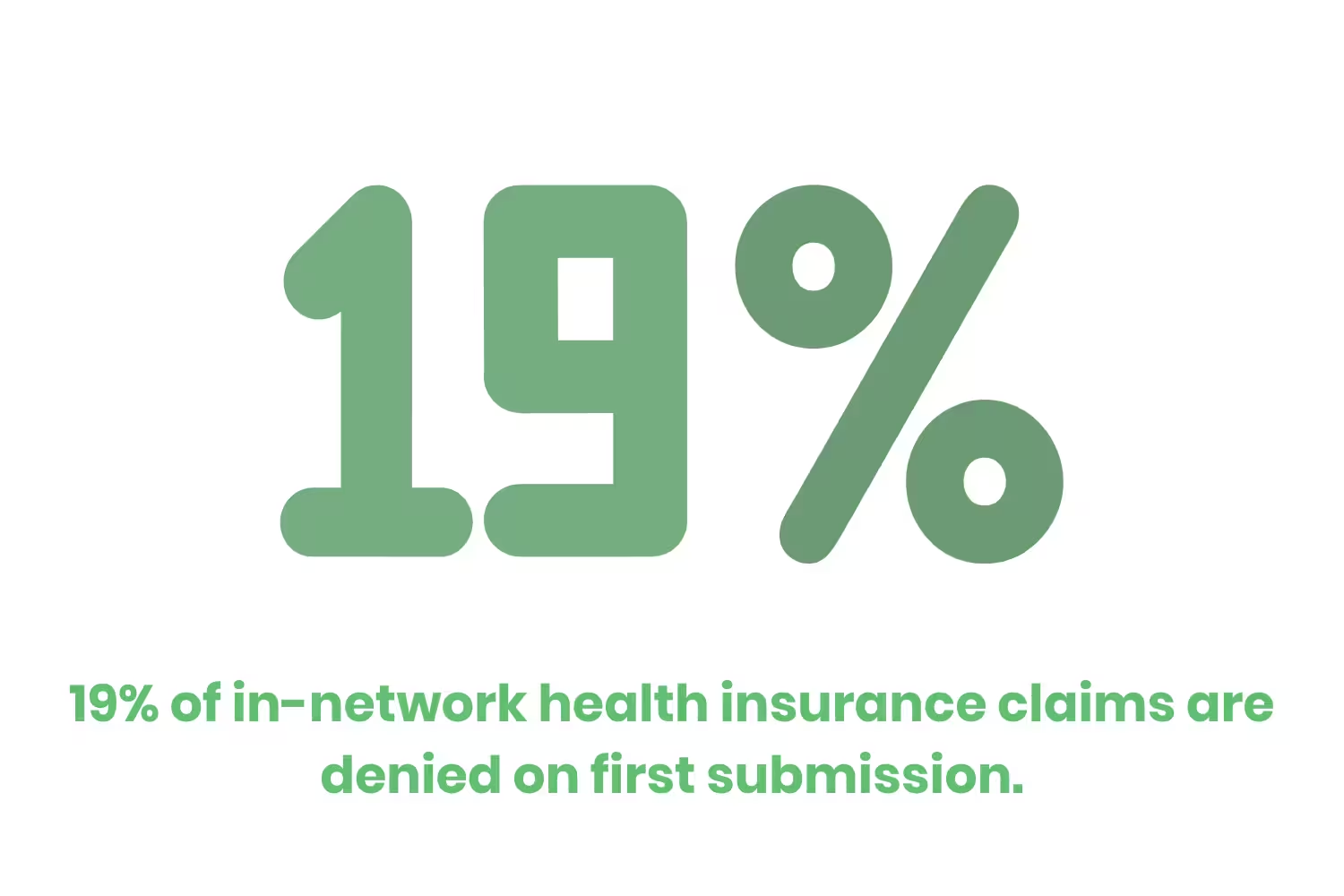
In healthcare billing, small mistakes can cause big payment delays. Industry data shows that about 19% of in-network health insurance claims are denied on first submission.
Many of these claim denials happen for administrative reasons, not clinical ones. Billing the wrong payer is one of the most common problems. A frequent example is the denial tied to denial code 109.
Understanding the CO-109 denial code matters for any team that wants faster reimbursement and stronger revenue cycle management results. This guide explains what CO-109 means, why it happens, how to fix it, and how to prevent repeat denials containing this code. When organizations improve insurance verification and payer selection, they reduce delays and protect claim reimbursement.
What is a CO-109 denial code and what does code 109 mean for my bill?
A denial containing code 109, means a claim or service was sent to the wrong payer. In other words, the claim is submitted to an insurer that's not responsible for the claim.
If you see code 109 on your bill, it does not mean the care was denied forever. It means the payer believes another insurance plan, payer or contractor, or medicare contractor should review the claim.
The denial code shows a payer responsibility issue. The service may still be covered by the payer, just not the one that received it. In most cases, the claim must be sent to the correct insurance plan for proper claim processing.
What common causes of CO-109 denials stem from coding errors?
The CO-109 denial code happens when a claim goes to the wrong place. It is rarely a true clinical coding issue. Most of the time, it is a data or insurance setup problem.
Common causes include:
- Wrong insurance information in the electronic health record
- Failure to update incorrect insurance after a coverage change
- Listing the incorrect patient as the subscriber
- Using a procedure code that makes the service look out-of-network or that the service is not covered
- Sending claims to the wrong insurance companies because of system defaults
These errors increase claim denials and slow medical billing. Even small mistakes in subscriber data, policy numbers, or coordination of benefits can trigger a 109 denial code.
How can revenue cycle teams verify and prevent CO-109 denials before claim submission?
Preventing CO 109 denials starts before claim submission. Strong front-end steps protect the entire revenue cycle and reduce denial management work later.
Teams should verify active insurance coverage in real-time. They should confirm the order when multiple insurance exists. They should also review payer rules that affect how a claim is submitted.
Clear documentation and consistent insurance verification workflows reduce the risk that a claim is submitted to the wrong payer.
What verification steps reduce wrong payer or incorrect insurance claims?
To avoid a wrong payer or contractor issue, teams should:
- Complete insurance verification before each visit
- Confirm eligibility dates
- Check subscriber and dependent details
- Confirm the claim to the correct payer is selected
- Review coordination of benefits information
These steps reduce coordination of benefits problems and improve the claim submission process. When staff confirm insurance coverage before service, they prevent avoidable claim denials tied to code 109.
How should medical billing teams handle multiple insurance plans to avoid CO-109 denials?
Multiple insurance plans are a common cause of CO-109 denials. Patients may have employer coverage, Medicare, Medicaid, or coverage through a spouse.
Proper Coordination of Benefits (COB) decides which insurance plan pays first. If Medicare applies, the Medicare contractor rules decide the order. If the order is wrong, the claim goes to the wrong payer and returns with a 109 denial code.
Billing teams must document primary, secondary, and tertiary insurance clearly. They should review the birthday rule for dependents and employer group health plan rules when needed. Accurate COBs ensure each claim is submitted in the correct order.
What role does insurance verification and eligibility checks play in denial management?
Insurance verification and eligibility checks are key parts of denial management. They are the first defense in revenue cycle management.
When teams confirm the patient's insurance coverage before service, they reduce errors. This helps streamline the billing process, improve claim processing, and speed up claim reimbursement.
Consistent verification lowers administrative claim denials and supports financial stability. Over time, better front-end accuracy reduces repeat CO 109 denials.
How do payers handle a claim with denial code 109 — who should be billed?
When a payer issues denial code 109, it means another insurer is responsible for the claim.
The payer or contractor checks enrollment records, effective dates, and prior billing. If another plan should pay first, the claim receives a 109 denial code and is returned unpaid.
The provider must then identify the correct insurance plan and submit claims to the right payer. The patient is not automatically responsible if other active coverage exists.
How does the payer or contractor determine the correct insurance plan for reimbursement?
The payer or contractor reviews:
- Active enrollment data
- Insurance plan dates
- Submitted insurance information
- Known coordination of benefits files
- Prior claim history
If the listed plan is wrong, denial code 109 is returned. The payer uses available data to determine payer responsibility before issuing payment.
Understanding this review process helps revenue cycle teams avoid sending claims to the wrong insurance companies.
What does the remark code or reason code say about resubmitting to the correct insurer?
The remark code, reason code, and group code explain next steps. They often state the claim must be resubmitted to another insurer.
The claim adjustment code 109 confirms the claim must go to the correct plan before payment. Teams should review the denial reason code carefully to see if COB updates or insurance corrections are required.
Clear interpretation of remark code details improves denial management and reduces repeat errors.
What are real-life examples and how do you appeal or correct a CO-109 denial?
An example of CO-109 denial code shows how small mistakes create delays. Real-life scenarios help teams understand the impact on claim reimbursement.
Examples of CO-109 denial: Common Scenarios and Root Causes
A common example of CO-109 denial involves a patient with employer coverage and Medicare. The claim goes only to the employer plan. The commercial payer sends a denial for wrong insurance because Medicare should have been billed first.
Other scenarios include:
- A patient changes jobs and new insurance information is not updated
- A dependent is billed under the wrong subscriber
- Workers compensation coverage is not identified
- Medicaid eligibility overlaps with commercial coverage
Root causes often include missing insurance information, skipped eligibility checks, or confusion with multiple insurance plans.
How to correct and resubmit the claim to the correct payer after a 109 denial
To fix the issue:
- Verify active insurance coverage
- Update the electronic health record
- Confirm the correct insurance
- Review coordination of benefits details
- Resubmit the claim to the correct payer
Once corrected, teams can properly submit claims and allow normal reimbursement to continue. Quick action reduces accounts receivable delays.
What steps in denial management and revenue cycle management prevent repeat 109 denials?
Strong denial management and clear revenue cycle management steps reduce repeat 109 denials.
More specifically, best practices include:
- Tracking denial trends
- Reviewing payer-specific Structure rules
- Auditing the claim submission process
- Monitoring how each claim is submitted
- Training staff on insurance verification standards
When teams analyze claim denials and adjust workflows, they strengthen the revenue cycle. Preventing CO 109 denial code errors reduces waste and supports steady claim reimbursement.
Conclusion
The CO-109 denial code is preventable. It signals the claim went to the wrong payer or shows wrong payer or contractor responsibility.
With strong insurance verification, accurate coordination of benefits, and careful claim submission, organizations can reduce claim denials, protect claim reimbursement, and maintain financial stability.
Simple front-end steps, clear data, and consistent denial management improve long-term revenue cycle management results.
Emphasize your product's unique features or benefits to differentiate it from competitors
In nec dictum adipiscing pharetra enim etiam scelerisque dolor purus ipsum egestas cursus vulputate arcu egestas ut eu sed mollis consectetur mattis pharetra curabitur et maecenas in mattis fames consectetur ipsum quis risus mauris aliquam ornare nisl purus at ipsum nulla accumsan consectetur vestibulum suspendisse aliquam condimentum scelerisque lacinia pellentesque vestibulum condimentum turpis ligula pharetra dictum sapien facilisis sapien at sagittis et cursus congue.
- Pharetra curabitur et maecenas in mattis fames consectetur ipsum quis risus.
- Justo urna nisi auctor consequat consectetur dolor lectus blandit.
- Eget egestas volutpat lacinia vestibulum vitae mattis hendrerit.
- Ornare elit odio tellus orci bibendum dictum id sem congue enim amet diam.
Incorporate statistics or specific numbers to highlight the effectiveness or popularity of your offering
Convallis pellentesque ullamcorper sapien sed tristique fermentum proin amet quam tincidunt feugiat vitae neque quisque odio ut pellentesque ac mauris eget lectus. Pretium arcu turpis lacus sapien sit at eu sapien duis magna nunc nibh nam non ut nibh ultrices ultrices elementum egestas enim nisl sed cursus pellentesque sit dignissim enim euismod sit et convallis sed pelis viverra quam at nisl sit pharetra enim nisl nec vestibulum posuere in volutpat sed blandit neque risus.
Use time-sensitive language to encourage immediate action, such as "Limited Time Offer
Feugiat vitae neque quisque odio ut pellentesque ac mauris eget lectus. Pretium arcu turpis lacus sapien sit at eu sapien duis magna nunc nibh nam non ut nibh ultrices ultrices elementum egestas enim nisl sed cursus pellentesque sit dignissim enim euismod sit et convallis sed pelis viverra quam at nisl sit pharetra enim nisl nec vestibulum posuere in volutpat sed blandit neque risus.
- Pharetra curabitur et maecenas in mattis fames consectetur ipsum quis risus.
- Justo urna nisi auctor consequat consectetur dolor lectus blandit.
- Eget egestas volutpat lacinia vestibulum vitae mattis hendrerit.
- Ornare elit odio tellus orci bibendum dictum id sem congue enim amet diam.
Address customer pain points directly by showing how your product solves their problems
Feugiat vitae neque quisque odio ut pellentesque ac mauris eget lectus. Pretium arcu turpis lacus sapien sit at eu sapien duis magna nunc nibh nam non ut nibh ultrices ultrices elementum egestas enim nisl sed cursus pellentesque sit dignissim enim euismod sit et convallis sed pelis viverra quam at nisl sit pharetra enim nisl nec vestibulum posuere in volutpat sed blandit neque risus.
Vel etiam vel amet aenean eget in habitasse nunc duis tellus sem turpis risus aliquam ac volutpat tellus eu faucibus ullamcorper.
Tailor titles to your ideal customer segment using phrases like "Designed for Busy Professionals
Sed pretium id nibh id sit felis vitae volutpat volutpat adipiscing at sodales neque lectus mi phasellus commodo at elit suspendisse ornare faucibus lectus purus viverra in nec aliquet commodo et sed sed nisi tempor mi pellentesque arcu viverra pretium duis enim vulputate dignissim etiam ultrices vitae neque urna proin nibh diam turpis augue lacus.